ISLAMABAD: The Pakistan Institute of Development Economics (PIDE) unveiled landmark findings from the Pakistan first digital panel survey-2024 which tracked economic and social change for more than two decades.
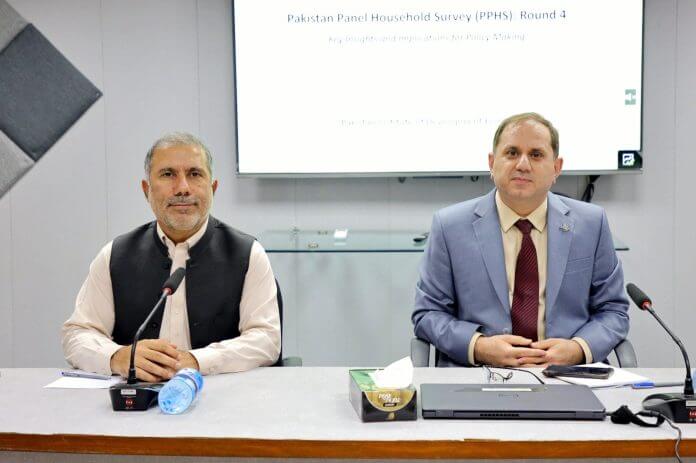
It was launched at an evidence-packed seminar titled “Pakistan Panel Household Survey (PPHS): Key Insights and Implications for Policymaking,” which featured Dr. Shujaat Farooq, Dean of Research at PIDE, and was moderated by Dr. Karim Khan, Dean Academics at PID, a news release said.


Dr Farooq announced that 76 percent of the households surveyed in 2010 were successfully re-tracked in 2024, an exceptional achievement in longitudinal research.
Supported by RASTA-DDR and conducted in collaboration with the Pakistan Bureau of Statistics (PBS), the PPHS expanded from 16 to 30 districts, now including major urban centres such as Lahore, Karachi, Hyderabad, and Peshawar.
The 2024 round covers 8,621 households nationwide and is the first fully digital survey, conducted via tablets for real-time monitoring and improved data quality.
The 2024 wave also introduced several new research modules, including learning poverty, care work, disability, financial literacy, and a detailed child well-being and parenting section, along with modernized consumption categories such as “eating out.”
Education data from PPHS 2024 reveal both progress and persistent challenges. While literacy rates have improved, 34 percent of Grade 3–8 students still cannot solve Grade-2 level division problems, highlighting severe learning poverty.
Affordability remains a key barrier, with 71 percent of parents citing financial constraints as the main reason for school dropout. Middle- and matric-level dropout rates stand at 34 percent and 21 percent, respectively, underscoring significant inequalities in learning outcomes.
Labour market data show mixed trends. Male labour force participation slightly declined from 80 percent to 78 percent, while female participation increased modestly from 23.7 percent to 26.9 percent over 14 years.
Despite the small gain, women remain concentrated in agriculture and informal jobs, with limited access to higher-value sectors. Occupational mobility has also stagnated, as the shift from blue- to white-collar work remains minimal.
In terms of intergenerational mobility, the findings are encouraging. University graduates now make up 9 percent of the younger generation compared to only 1 percent of their fathers, showing progress in educational attainment.
Ownership of inherited parental homes increased from 58 percent to 81 percent, and half of surveyed families (50 percent) perceive themselves as financially better off than their parents.
On the health front, the survey highlights major progress. Antenatal care coverage has increased by 28.5 percentage points since 2001, reaching 80.9 percent, while skilled birth attendance rose by 69.5 points to 88.5 percent. Home births have dropped sharply to 11.6 percent—a decline of 57.5 points—and TT vaccination coverage reached 72.3 percent, marking a 35-point improvement.Buy vitamins and supplements
However, regional disparities persist, particularly in Balochistan, where access to maternal healthcare remains limited.
Child malnutrition trends show improvement, with stunting declining from 60 to 43 percent and underweight children dropping from 50 to 33 percent, although wasting increased slightly.
Food insecurity, however, remains widespread. Only 19.5 percent of households can always afford desired meals, while 30 percent sometimes go without three meals a day. Inflation was identified by more than 60 percent of households as the most severe shock impacting their livelihoods.
The PPHS also paints a nuanced picture of poverty and inequality. Using the Cost of Basic Needs (CBN) method, Pakistan’s poverty rate stands at 30.5 percent, 36.6 % in rural areas and 17.8 percent in urban areas.
Rural poverty has declined from 46.1 to 37.5 percent, and urban poverty from 41.0 to 23.4 percent, yet income inequality has widened, with upper-income groups’ consumption rising faster than that of lower-income panel households.
indicates that, with better inflation control, the poverty rate could have been lower by around seven percentage points.
Social protection coverage has improved significantly. Around 22 to 23 percent of households now benefit from programs such as BISP and Zakat, up from 10 percent in 2010, while 10 to 11 percent have access to microfinance networks.
Additionally, around 60 percent of households report engaging in charitable giving, though mostly through informal channels.
Moderator Dr. Karim Khan commended the study’s methodological rigor, emphasizing that its precise tracking of households and split families makes PPHS an invaluable source for policy analysis. He noted that the findings directly inform inclusive social and economic policy design.Financial software
The seminar concluded with policy priorities centered on reducing learning poverty, expanding women’s economic participation, strengthening social protection systems, improving job quality, and investing in child well-being infrastructure such as playgrounds, libraries, and safe study spaces.
PIDE announced that the PPHS 2024 microdata will soon be made publicly available to researchers and students, alongside a 15-chapter, 200-page technical report prepared by RASTA.
Dr. Farooq expressed optimism that this dataset will support “dozens of PhD theses and policy papers,” contributing to Pakistan’s evidence-based policy ecosystem.