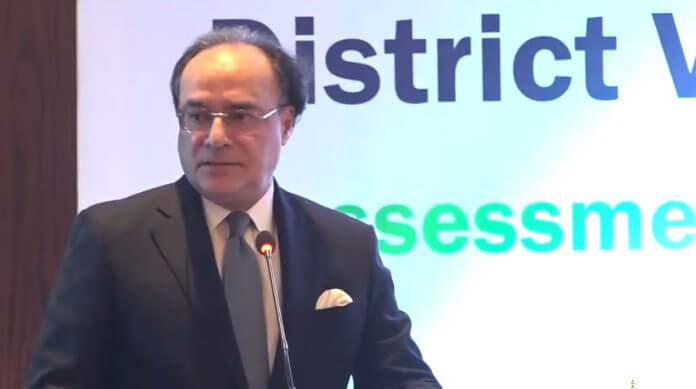
ISLAMABAD: Federal Minister for Finance and Revenue Senator Muhammad Aurangzeb on Monday said Pakistan’s long-term economic outlook was inseparably linked to how effectively the country confronted the dual national challenges of rapid population growth and mounting climate vulnerability.
He expressed these views while addressing the launch ceremony of the District Vulnerability Index for Pakistan (DVIP), organized by the Population Council here.

The minister noted that while the country continued its trajectory toward macroeconomic stabilization and growth, Pakistan could not realize its full potential without addressing the pressures created by population momentum and escalating climate risks.
He highlighted that the impacts of high population growth were reflected in persistent human development challenges, including child stunting, learning poverty and a workforce insufficiently equipped for the future.
At the same time, the minister said, climate change continued to expose communities to extreme temperatures, floods, droughts, and environmental degradation, with the most severe effects falling on districts already struggling with poverty, weak infrastructure, and limited access to essential services.
Senator Aurangzeb affirmed the ministry’s commitment to supporting national efforts in population and climate-related policymaking by integrating these priorities into budgeting and resource allocation.
He underscored the increasing role of finance ministries globally in mainstreaming climate and demographic considerations, reinforcing that Pakistan must adopt the same approach to ensure long-term resilience and equitable development.
The minister commended the Population Council for producing a comprehensive, data-driven District Vulnerability Index based on three years of research.
He emphasized that the Index provides actionable management information through its detailed analysis across six domains, offering meaningful insights into geographic disparities and identifying districts most at risk, particularly in Balochistan and Sindh.
The findings reflect how social vulnerabilities and climate exposure reinforce each other, creating compounded risks for already marginalized populations.
He also drew attention to the growing trend of rural-to-urban migration and the expansion of informal settlements, where inadequate water, sanitation, and hygiene conditions contribute to poor nutrition outcomes and perpetuate child stunting.
He encouraged further research on urban vulnerabilities so that the national planning could address the full spectrum of demographic and climate-linked challenges.
Senator Aurangzeb highlighted the need to recognize the interdependence between population dynamics and climate impacts and called for the integration of vulnerability metrics into future frameworks for resource allocation.
He stressed that incorporating these insights into national planning will be critical for ensuring equity, strengthening resilience, and directing support to the districts that need it most.
The minister appreciated the support of development partners, particularly the UK Government and FCDO, for their continued assistance in governance reforms, revenue mobilization, and evidence-based policymaking.
He expressed confidence that the District Vulnerability Index will serve as an important tool for guiding future national strategies and thanked the organizers and contributors for their efforts.