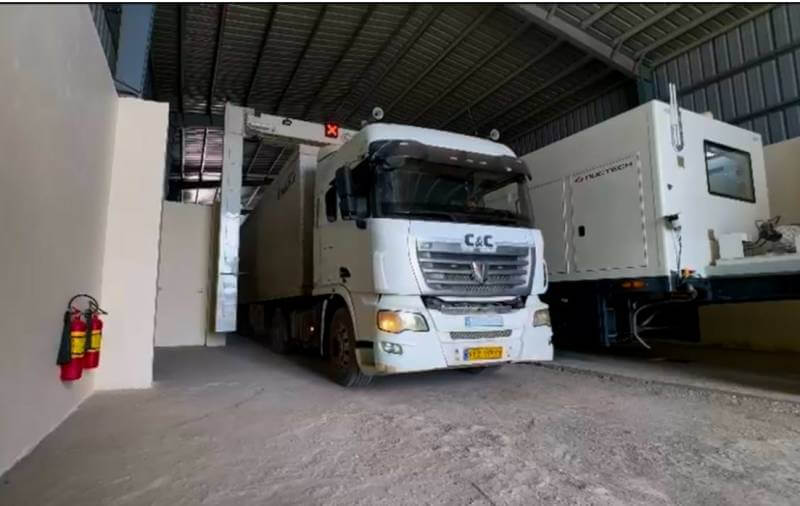
ISLAMABAD: Pakistan has achieved a significant milestone in cross-border trade with China and Iran following the installation of advanced artificial intelligence-based (AI) scanning systems at two major border terminals.
According to the report, the National Logistics Corporation (NLC) has deployed state-of-the-art scanners at the Sost Dry Port on the Pakistan–China border and the Gabd Border Terminal on the Pakistan–Iran frontier, aimed at strengthening the security and efficiency of commercial cargo movement.


The newly installed systems are capable of scanning vehicles in as little as 22 seconds, marking a substantial improvement over traditional inspection methods.
Powered by artificial intelligence, the scanners can accurately identify cargo codes and conduct detailed structural analyses of goods, significantly reducing the risk of misdeclaration and illicit trade.
Data generated through each scan is digitally recorded, enhancing transparency and accountability throughout the clearance process at the border terminals.
Authorities believe the technology will lead to a noticeable acceleration in customs clearance while sharply cutting down container waiting times at the borders.
By reducing human intervention in inspection procedures, the system is expected to facilitate smoother and more reliable movement of legally traded goods.
The development is likely to boost overall trade performance along Pakistan’s key economic corridors, particularly as commercial engagement with neighbouring China and Iran continues to expand.
Analysts view the move as a strategic step toward strengthening regional connectivity and supporting Pakistan’s role in transnational trade networks.
NLC officials said the initiative reflects the organisation’s broader effort to modernise border infrastructure and bring Pakistan’s trade logistics in line with international standards, reinforcing the country’s position as a vital trade gateway in the region.