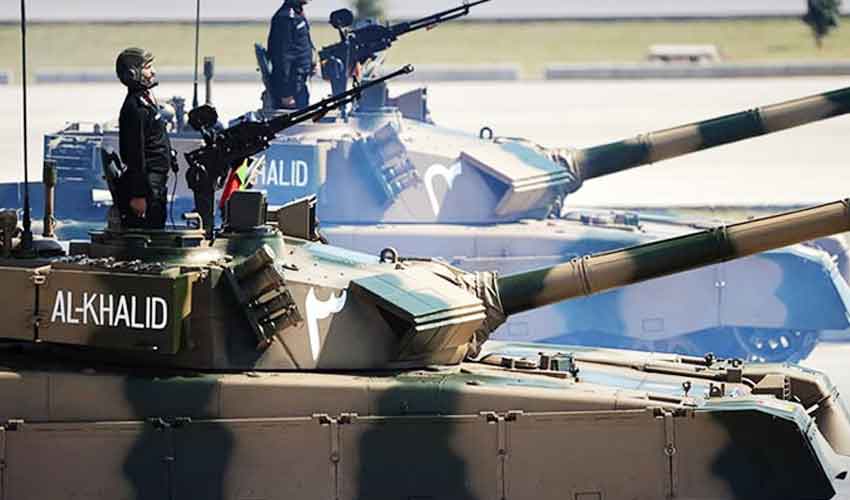
ISLAMABAD: The National Assembly on Monday unanimously approved a Rs. 3 trillion allocation for Pakistan’s armed forces as part of the federal budget for the fiscal year 2026-27, clearing 125 demands for grants and setting the stage for the passage of the Rs. 18.77 trillion budget.
The lower house is expected to formally approve the federal budget on June 23, while supplementary grants will be considered on June 24. Notably, no opposition member submitted a cut motion against the defence allocation, allowing the proposal to pass without debate or resistance.


Key Budget Allocations Approved by National Assembly
Alongside the defence budget, lawmakers approved several major allocations across various sectors and government departments, including:
Rs. 661.27 billion for the energy sector
Rs. 578.84 billion for the Power Division
Rs. 1.11 billion for the Petroleum Division
Rs. 76.61 billion in external development loans and advances for the Power Division
Rs. 1.162 trillion for pension payments
Rs. 2.504 trillion for grants and subsidies
Rs. 85.6 billion for the Federal Board of Revenue (FBR)
Rs. 231.08 billion for other development expenditures
Funding was also approved for key institutions, including the Prime Minister’s Office, Cabinet Division, National Disaster Management Authority (NDMA), Higher Education Commission (HEC), Board of Investment, National Assembly, Senate, and several federal ministries.
Government Highlights Progress in Energy Sector
During the budget session, Power Minister Sardar Awais Ahmad Khan Leghari defended the government’s economic and energy reforms, stating that the fiscal burden on the power sector had decreased significantly.
According to the minister, the sector’s fiscal burden fell from Rs. 1.287 trillion in FY2024-25 to Rs. 893 billion, with a further reduction to Rs. 700 billion projected in the coming fiscal year.
Leghari also claimed that circular debt had been reduced by Rs. 780 billion, bringing it down from Rs. 2.4 trillion, while losses of power distribution companies (DISCOs) dropped from Rs. 591 billion to Rs. 335 billion.
He further stated that revised agreements with Independent Power Producers (IPPs) would save the country approximately Rs. 3.5 trillion in future liabilities. Additionally, 76 percent of Pakistan’s electricity generation now comes from indigenous energy sources, while a Rs. 50 billion initiative has been launched to eliminate economic load-shedding by June 2027.