ISLAMABAD: The Federal board of Revenue (FBR) on Thursday said sweeping reforms initiated under the Prime Minister’s Maritime Task Force had significantly enhanced customs efficiency, increased revenue collection, curbed smuggling and improved trade facilitation.
It said a series of digital and infrastructure interventions were also underway to transform Pakistan into a regional maritime and logistics hub.


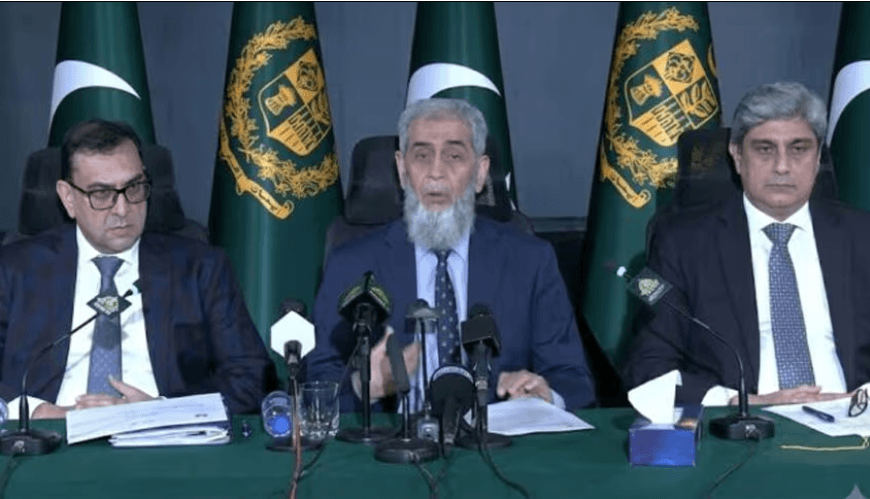
Addressing a joint news conference along with Chairman of the Prime Minister’s Maritime Task Force Iftikhar Rao and Secretary Maritime Affairs Nadeem Mahbub, FBR Member Customs Syed Shakeel Shah said the task force had identified key structural bottlenecks in the maritime sector and facilitated their swift resolution through coordinated implementation.
He said one of the most successful reforms was the introduction of the faceless customs assessment system at ports, which eliminated direct interaction between customs officials and importers, improved transparency and substantially enhanced compliance.
“The average revenue per Goods Declaration (GD) has increased from Rs 6.8 million to approximately Rs 7.7 million, reflecting a 16 per cent improvement,” Shah said, adding that import-related tax collection had grown by 14 per cent, of which eight percentage points resulted from improved enforcement and compliance while six percentage points were driven by higher import volumes.
Highlighting the impact on port efficiency, he said customs clearance time had been reduced from 53 hours to only 18 hours since the task force was established.
“Our next target is to bring customs dwell time down to 12 hours over the next one to two years, placing Pakistan below international benchmarks,” he said.
The FBR member said the task force had also paved the way for Pakistan’s entry into the ship bunkering business by facilitating the formulation and notification of comprehensive bunkering regulations.
He said international operators were already planning fuel supply operations at Karachi and Gwadar ports, which would attract larger vessels and enhance maritime commercial activity.
He added that dredging work had commenced at both major ports to enable the handling of bigger ships, a critical step towards positioning Pakistan as a regional transshipment and logistics hub.
Shah said customs and sales taxes on vessels and shipbuilding had been abolished, removing a major obstacle to investment in Pakistan’s maritime industry.
He said the task force had also helped streamline cargo handling at Azakhel Dry Port, introduced faceless assessment there, and curbed misuse of cargo clearance procedures.
The FBR member said work was progressing on Digital Enforcement Stations under the FBR transformation programme to facilitate legitimate trade while using risk-based targeting to intercept smuggled and tax-evaded goods without disrupting lawful commerce.
He said enforcement measures had produced encouraging results, with legal imports of tyres increasing by 42 percent, fabrics by 41 percent, toiletries by 75 percent and electronics by 105 percent, reflecting a significant reduction in illicit trade.
“The success against tyre smuggling has restored investor confidence, making local investment in tyre manufacturing commercially viable,” he observed.
Shah said freight forwarding agents were being brought under an automated registration regime through the Pakistan Single Window, while the licensing examination for customs agents had been outsourced to the Institute of Business Administration (IBA), Karachi, to ensure transparency and professional standards.
He said a new point-based accountability system had also been introduced for customs agents to improve declaration quality.
Among future reforms, Shah said the FBR planned to expand advance filing of Goods Declarations, allowing importers to complete customs formalities before cargo arrived in Pakistan, thereby reducing congestion and accelerating cargo clearance.
He said the current uptake of advance declarations had reached around eight percent and the target was to raise it beyond 50 percent during the current fiscal year.
The FBR member said customs operations at ports were also being expanded towards 24-hour working through fresh recruitment to ensure uninterrupted cargo clearance.
He said the Pakistan Single Window-based Port Community System was being rolled out to digitally integrate customs, regulators, ports, terminal operators, banks and logistics providers, enabling traders to complete documentation and payments online without visiting government offices.
Shah said the FBR was simultaneously modernising its 14-year-old WeBOC customs system under a comprehensive technology upgrade recommended by the task force, with major modules scheduled for rollout during the current financial year and complete implementation targeted by June 2028.
He said artificial intelligence-assisted non-intrusive cargo scanning and modern cargo tracking systems had already been introduced to reduce physical inspections, strengthen risk management and monitor container movement from ports to inland destinations and border crossings in real time.
Shah said the task force had also resolved the longstanding issue of 4,000 to 5,000 litigation-hit containers occupying valuable port space, making the area available once again for import, export and transshipment activities.
He said the Prime Minister’s Maritime Task Force had identified 99 reform interventions, many of which had already been implemented, while the remaining measures were being pursued through regular monitoring to further improve Pakistan’s maritime competitiveness and ease of doing business.