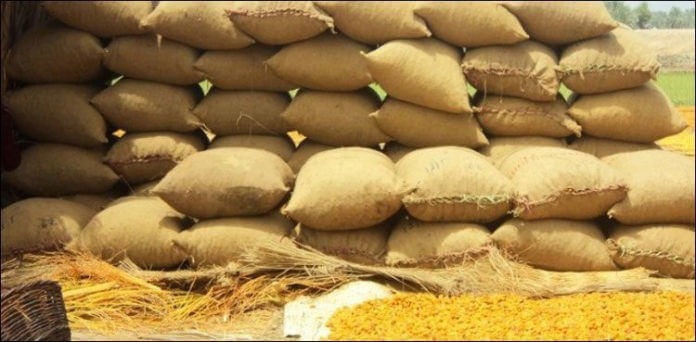
KARACHI: Sindh government has taken another significant step to strengthen transparency and accountability in its province-wide campaign against illegal wheat hoarding by suspending five officials of the Food Department over allegations of misconduct, negligence and suspected facilitation of wheat hoarders.
The action was taken on the directives of Minister for Food Makhdoom Mehboob-uz-Zaman following the receipt of a detailed report submitted by the Commissioner Sukkur Division regarding recent anti-hoarding operations in District Khairpur.


Acting swiftly on the findings of the report, the Food Department placed five officials under immediate suspension pending a transparent departmental inquiry.
Minister Mehboob-uz-Zaman said that the Sindh government had adopted a zero-tolerance policy against corruption, abuse of authority and any form of collusion with hoarders.
He said that the government’s campaign against illegal wheat stockpiling was aimed at protecting consumers, ensuring uninterrupted availability of wheat and flour, preventing artificial shortages and maintaining price stability across the province.
According to the report, intelligence-based verification revealed that substantial quantities of wheat were allegedly shifted over the past two days from previously identified commercial premises in Abul Wah Chowk, Gambat, to properties reportedly owned or controlled by influential individuals in an apparent attempt to evade enforcement action by the Food Department.
The inquiry further suggested that confidential operational information regarding planned raids may have been leaked in advance, enabling certain wheat traders to conceal or relocate illegally hoarded stocks before the arrival of raiding teams.
The report observed that, if established through inquiry, such actions would constitute gross misconduct, abuse of official position and active facilitation of illegal hoarding.
The report also alleged that one of the officials had disclosed the identity of Intelligence Branch personnel engaged in anti-hoarding operations to traders in Kot Diji, thereby compromising confidential government operations and exposing officials performing sensitive duties.