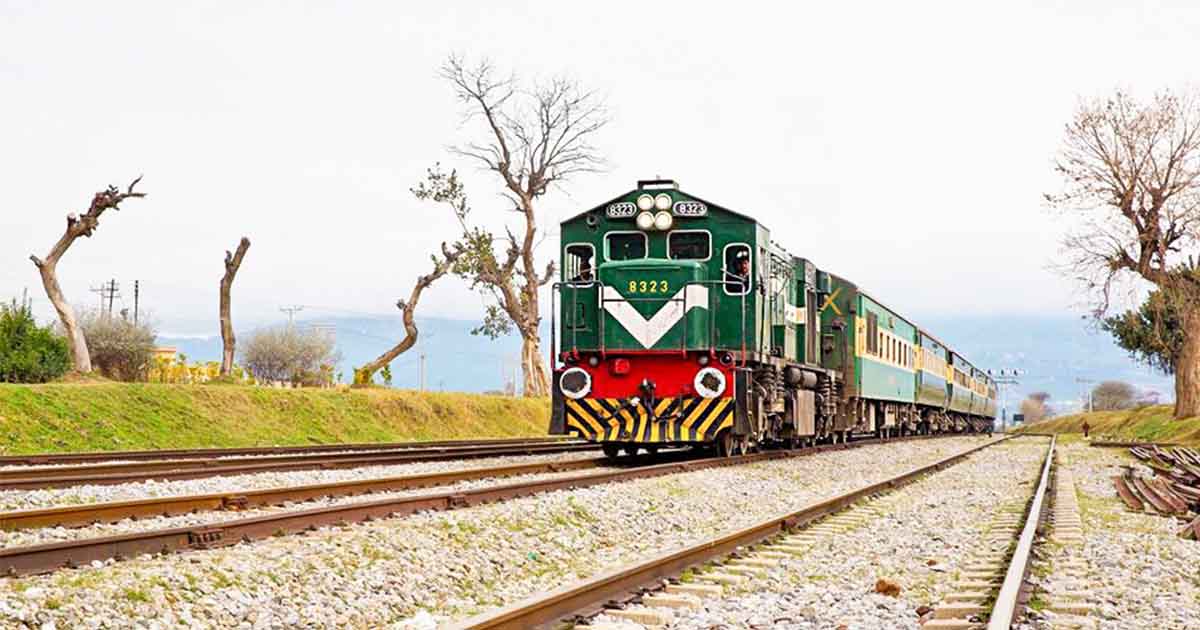
KARACHI: The Asian Development Bank (ADB) is weighing up to $1.1 billion in financing to upgrade the Karachi-Rohri section of Pakistan Railways’ Main Line-1 (ML-1), with the proposed investment combining major infrastructure improvements with operational and institutional reforms.
According to ADB project documents, the proposed “Upgradation of Pakistan Railways Main Line-1 (Karachi-Rohri Section) Project” would receive $1 billion from the lender’s ordinary capital resources and another $100 million in concessional ordinary capital resources lending through a multitranche financing facility.


The project remains at the proposed stage. It received concept clearance on June 18, 2026, while fact-finding is scheduled for January 11-22, 2027. ADB has yet to specify a date for approval.
The investment would cover approximately 480 kilometres of the Karachi-Rohri section, a core passenger and freight corridor connecting the country’s main port with the wider national railway network.
The proposed upgrade would focus on developing climate-resilient, high-capacity railway and port connectivity and modernising signalling and railway operations. It would also seek to improve operations, maintenance and asset management while strengthening Pakistan Railways’ institutional capacity.
ADB has identified deteriorating railway infrastructure and the underutilisation of rail as significant constraints on Pakistan’s transport efficiency, logistics competitiveness and sustainable economic growth.
Decades of investment tilted towards roads have left the country’s transport system heavily dependent on road transport, according to the lender, with roads carrying the overwhelming majority of passengers and freight.
ADB estimates that logistics costs amount to around 15% of Pakistan’s GDP. Rail transport, particularly for bulk freight, is considerably cheaper and cleaner but remains underutilised.
The proposed ML-1 investment is therefore intended to encourage a shift of freight from road to rail while improving passenger mobility, connectivity and safety. ADB expects the project to improve railway transport efficiency, safety and sustainability along the Karachi-Rohri corridor by 2040.
However, the lender has stressed that upgrading physical infrastructure alone will not address the railway sector’s structural problems. The investment would need to be accompanied by deeper institutional and financial reforms in Pakistan Railways to make operations sustainable.
ADB is already supporting the railway transformation through Project Readiness Financing approved in 2025. The proposed follow-on multitranche financing would combine infrastructure investment with capacity building and governance reforms.
The lender said better railway connectivity could improve access to education, healthcare, markets and economic opportunities for vulnerable groups, including women, elderly people, persons with disabilities and children.