ISLAMABAD: Pakistan’s loss-making state-owned enterprises (SOEs) recorded combined losses of Rs342.8 billion during July-December 2025, while government support to the entities reached Rs804 billion in the first half of fiscal year 2025-26, according to a review by the Cabinet Committee on State-Owned Enterprises (CCoSOEs).
Profitable SOEs generated aggregate profits of Rs423.3 billion during the first half of FY2025-26, while SOE contributions to the government stood at Rs839 billion, resulting in a positive net fiscal flow of Rs35 billion in favour of the government during the period.

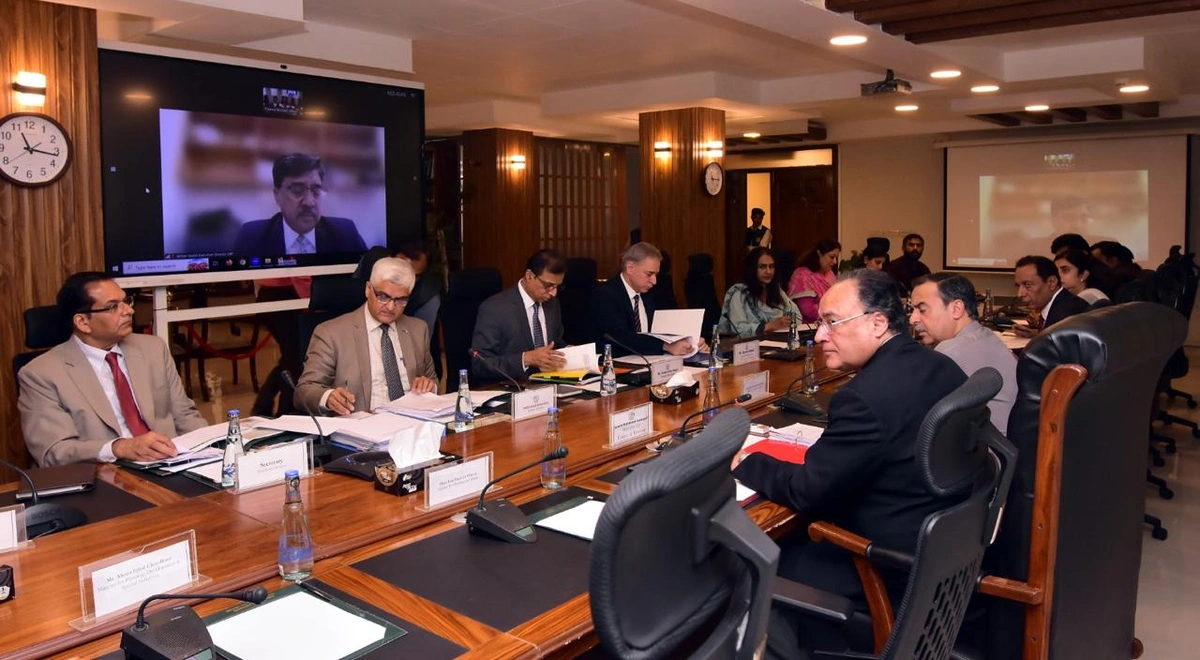
The figures were presented as the Cabinet Committee on State-Owned Enterprises (CCoSOEs) reviewed the Bi-Annual Performance of Federal State-Owned Enterprises for the first half of FY2025-26 at a meeting held at the Finance Division under the chairmanship of Federal Minister for Finance and Revenue Senator Muhammad Aurangzeb.
The meeting was also attended by Federal Minister for Maritime Affairs Muhammad Junaid Anwar Chaudhry.
The Central Monitoring Unit (CMU) of the Finance Division presented a detailed assessment covering financial and operational performance, profitability and losses, fiscal flows, implementation of approved business plans, governance, financial reporting and progress against key performance targets.
The performance reflected significant value being generated across several parts of the SOE portfolio, while also underscoring the need for continued corrective action and structural reforms in underperforming entities.
The committee noted that improving commercial performance, strengthening financial discipline and progressively reducing dependence on public support remain central objectives of the government’s SOEs reform agenda.
The review also identified areas requiring sustained attention, including circular debt and other fiscal risks, operational weaknesses in parts of the power and infrastructure sectors, corporate governance gaps and the need for stronger board effectiveness and accountability.
The committee emphasised continued implementation of approved business plans, measurable performance targets, improved operational efficiency and timely corrective action in underperforming entities.
As part of the government’s emphasis on greater transparency and data-driven governance, the committee was also given a demonstration of the CMU’s integrated digital reporting and analytics platform for SOEs.
The platform centralises SOEs’ data and enables standardised reporting, digital dashboards and deeper financial and operational analytics, strengthening the government’s ability to monitor performance, identify emerging risks and assess entities against agreed targets.
The committee welcomed the progress in strengthening the SOE monitoring and reporting framework and emphasised that greater transparency must be accompanied by stronger performance and accountability. It directed continued focus on financial discipline, governance, operational efficiency and effective implementation of approved business plans across the SOE portfolio.
The committee reiterated that the government’s objective is to develop an SOE portfolio that is more transparent, professionally governed, financially disciplined and increasingly commercially sustainable, while systematically addressing fiscal risks and reducing the burden of persistently underperforming entities on public finances.
The committee further approved a summary submitted by the Cabinet Division regarding the appointment of Independent Directors against vacant positions on the Board of Printing Corporation of Pakistan (PCP).
It also approved a summary submitted by the Science & Technology Division regarding appointment of Chairman of the Board of Directors of Indigenous Research and Development Agency (IRADA), in accordance with the State-Owned Enterprises Policy, 2023.