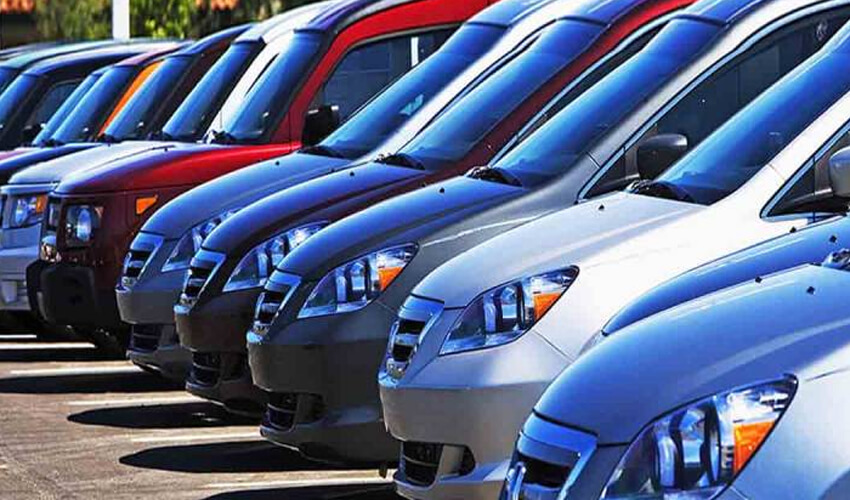
KARACHI: Pakistan’s car sales increased 19% year-on-year (YoY) to 50,480 units during the first quarter of FY27, despite declining 12% YoY and 3% month-on-month (MoM) to 15,104 units in September 2026, according to data released by the Pakistan Automotive Manufacturers Association (PAMA).
Research reports by Topline Securities and IMS Research attributed the September slowdown to uncertainty surrounding the new automobile policy, delays in hybrid vehicle invoicing and growing competition from imported vehicles.


Passenger car volumes declined 20% MoM during September, although a 126% MoM recovery in light commercial vehicles (LCVs) and pickups to approximately 4,200 units partially offset the decline.
Analysts said uncertainty over sales tax treatment for hybrid electric vehicles (HEVs) and plug-in hybrid electric vehicles (PHEVs) had affected invoicing and deliveries.
The concessionary general sales tax (GST) rate for hybrid vehicles expired on June 30, 2026, creating uncertainty for manufacturers. The subsequent reduction of GST to 18% has provided greater clarity and is expected to support deliveries in the coming months.
Among major assemblers, Indus Motor Company (INDU) outperformed the industry, recording a 31% YoY and 3% MoM increase in September sales to 4,142 units. The company was the only major assembler to register MoM sales growth during September.
Combined sales of Toyota Corolla, Yaris and Corolla Cross increased 34% YoY to 3,563 units, while Fortuner and Hilux Revo volumes rose 16% to 579 units.
Indus Motor’s market share improved to 27% from 26% in August, while cumulative first-quarter sales increased 34% YoY to approximately 13,300 units.
Honda Atlas Cars (HCAR), meanwhile, reported September sales of 2,128 units, down 8% YoY and 19% MoM. Combined sales of Honda City and Civic stood at 2,021 units, reflecting a 2% YoY increase but a 21% MoM decline.
Sales of the BR-V and HR-V fell 68% YoY to 107 units, although they increased 34% compared with August. IMS Research linked the annual decline partly to the discontinuation of the BR-V.
Honda’s market share declined to 14% from 17% in August. However, its cumulative sales for the first three months of FY27 increased 52% YoY to approximately 7,400 units.
Pakistan Suzuki Motor Company (PSMC) recorded a sharper decline, with September sales falling 46% YoY and 36% MoM to 4,862 units. Suzuki Alto sales dropped 29% YoY to 3,354 units, while Cultus volumes declined 68% to 138 units.
Hyundai Nishat Motors reported sales of 884 units, down 25% YoY but up 19% MoM.
Sazgar Engineering Works (SAZEW) reported combined Haval and Tank sales of 2,474 units for August and September, without providing separate monthly figures.
Sazgar’s cumulative sales during 1QFY27 stood at 3,137 units, down 12% YoY.
Two- and three-wheelers
Outside the passenger vehicle segment, two- and three-wheeler sales reached an all-time monthly high of 202,502 units in September, increasing 27% YoY and 14% MoM.
Cumulative two- and three-wheeler sales during the first quarter reached approximately 554,000 units, representing a 28% YoY increase.
Atlas Honda led the segment with sales of approximately 167,100 units, up 23% YoY.
Tractor sales also recovered, rising approximately 130% YoY and 73% MoM to 1,815 units in September.
Millat Tractors’ market share declined by eight percentage points MoM to 69%, while Al-Ghazi Tractors gained market share.
In the commercial vehicle segment, combined truck and bus sales increased 13% YoY and 7% MoM to 933 units, according to Topline Securities.
IMS Research reported that truck sales alone increased 18% YoY and 7% MoM, while bus sales declined 22% YoY to 73 units.
Ghandhara Industries recorded sales of 561 units, up 3% YoY, while Ghandhara Automobiles’ sales increased more than sevenfold compared with September last year.
Analyst expects a double-digit sales growth during FY27, driven by the introduction of new vehicle variants and the entry of additional brands. They said that approval of the new automobile policy would be an important near-term development for restoring confidence among buyers and manufacturers.
However, the they cautioned that continued uncertainty over policy measures and increasing imports of completely built-up vehicles and used cars could weigh on sales of locally assembled vehicles.