
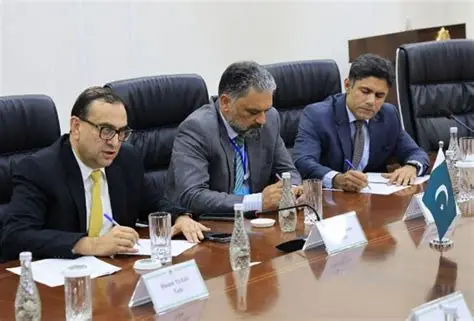
KARACHI: Pakistan and Uzbekistan have agreed to strengthen customs cooperation by expanding digital integration, enhancing information sharing and exploring the use of artificial intelligence (AI) to improve border security and facilitate regional trade.
The understanding was reached during a high-level meeting in Tashkent, where officials from both countries discussed ways to modernize customs operations through technology-driven solutions.


The Pakistani delegation, led by Federal Board of Revenue (FBR) Member Customs (Operations) Syed Shakeel Shah, is attending a conference jointly organized by the United Nations Office on Drugs and Crime (UNODC) and the World Customs Organization (WCO) under the Passenger and Cargo Control Programme.
During talks with Uzbekistan’s First Deputy Chairman of the Customs Committee, both sides reviewed existing cooperation and identified new areas for collaboration, including customs digitalization, AI and machine learning-based risk management, transit cargo monitoring and intelligence-led enforcement.
Pakistan highlighted that Uzbekistan is the first country connected to its Pakistan Single Window (PSW) platform for advance customs information exchange covering both imports and exports. The two countries also agreed to expand this digital connectivity to include transit trade data.
Officials said the enhanced cooperation is expected to improve the speed and quality of customs data exchange, strengthen border controls, reduce cargo clearance times and support safer, more efficient regional trade.
The discussions also covered the establishment of National Targeting Centres, real-time customs information exchange, mutual recognition of Authorised Economic Operator (AEO) programmes, recognition of regulatory documents, wider adoption of AI-powered risk analysis and stronger public-private partnerships to facilitate legitimate trade while combating illicit cross-border activities.
To advance these initiatives, both countries agreed to establish technical working groups that will prepare draft protocols aimed at deepening digital integration, improving regulatory coordination and promoting seamless trade and transit across the region.