Customs Today
  • Home
  • Islamabad
  • Karachi
  • Lahore
  • National
  • Transfers and Postings
  • Chambers & Associations
  • Business
No Result
View All Result
Customs Today
  • Home
  • Islamabad
  • Karachi
  • Lahore
  • National
  • Transfers and Postings
  • Chambers & Associations
  • Business
No Result
View All Result
Customs Today
No Result
View All Result
Home Science & Technology Science

Curiosity start drilling operations on bedrock at base of Mount Sharp

byCustoms Today Report
15/01/2015
in Science, Science & Technology
Share on FacebookShare on Twitter

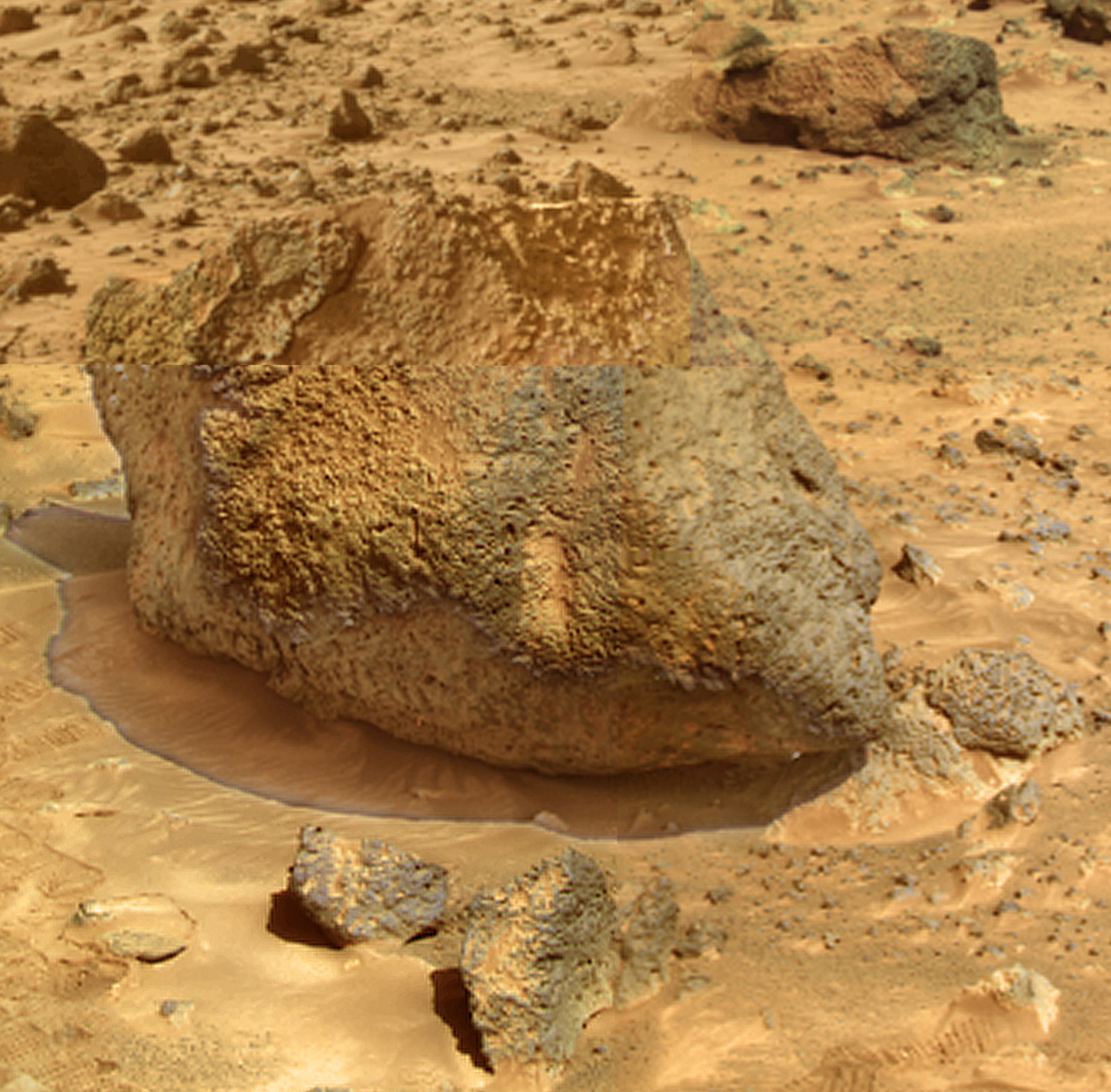
LONDON: On Sol 867 of its mission, Curiosity start drilling operations on a slab of bedrock at the base of Mount Sharp — but in so doing, the delicate target rock broke apart.
Although the slab might not be suitable for further drilling, mission scientists are excited by the opportunity to study the shattered rock left in Curiosity’s wake.
“The rock target Mojave that we drilled into yesterday is part of a larger expanse of fractured, soft bedrock at the Pahrump Hills site,” Mars Science Laboratory’s project scientist Ashwin Vasavada, of NASA’s Jet Propulsion Laboratory in Pasadena, Calif., told Discovery News.

In September, Curiosity arrived at Pahrump Hills, a small foothill at the base of Mount Sharp in the center of Gale Crater, and the mission has been studying the area ever since, trying to understand how the 3.5 mile high mountain formed. To do this, the rover is making extensive use of its suite of robotic geologist’s tools to drill into and chip away at the bountiful array of bedrock.


You might also like

Tesla driverless system to use updated radar technology

12/09/2016

Apple to develop its own self-driving technology

10/09/2016

After cleaning the surface of the rock, which has been named “Mojave,” it became clear that the rock contained crystallized mineral deposits that likely formed when Mars was a much wetter place. So to understand the nature of the deposits, mission managers gave the go-ahead to begin a test drill.
However, rather than smoothly boring into the rock, Mojave shattered, an outcome that didn’t surprise Vasavada’s team.
“We’ve seen similar fractured bedrock before and even cracked it on previous drill attempts in other locations,” he said. “So while we can’t necessarily predict it in advance, it also wasn’t terribly surprising to crack the rock and dislodge a few fragments of it.”


Tags: Ashwin VasavadaCalifJet Propulsion LaboratoryMarks rock can be science goldmineMars Science LaboratoryMount SharpPahrump Hills

Related Stories

Tesla driverless system to use updated radar technology

byCT Report
12/09/2016

WASHINGTON: Electric carmaker Tesla announced Sunday it was upgrading its Autopilot software to use more advanced radar technology. In a...

Apple to develop its own self-driving technology

byCT Report
10/09/2016

SAN FRANCISCO: Apple may not become an automaker, but it still wants to develop its own self-driving technology. The iPhone-maker's...

NASA spots slowest known magnetar

byCT Report
10/09/2016

WASHINGTON: Astronomers have found evidence of a magnetar - magnetised neutron star - that spins much slower than the slowest...

‘YouTubers’ outshining old-school television

byCT Report
09/08/2016

SAN FRANCISCO: A media revolution is taking place, and most people over 35 years of age aren’t tuned in. Millennial...

Next Post

Canada police seize marijuana, clutch two smugglers

  • Terms and Conditions
  • Disclaimer

© 2011 Customs Today -World's first newspaper on customs. Customs Today.

No Result
View All Result
  • Transfers and Postings
  • Latest News
  • Karachi
  • Islamabad
  • Lahore
  • National
  • Chambers & Associations
  • Business
  • About Us

© 2011 Customs Today -World's first newspaper on customs. Customs Today.