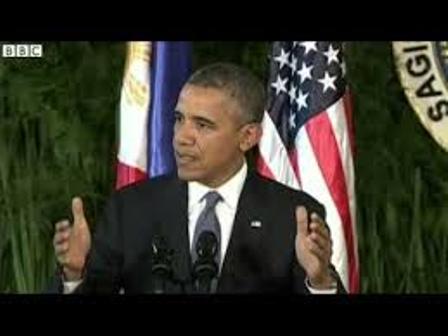
MOSCOW: Russian officials pushed back over comments made by President Barack Obama in his State of the Union speech the other night. He said Russia was isolated and its “economy in tatters”. Individuals with a firsthand view of the country’s economy said the president was dead-on in his assessment. Some affluent individuals who do business outside of Russia are starting to pay the price, say sources doing business with Russian clients.
Edward Mermelstein, a New York-based attorney who works with Russian clients and advises on cross-border investments in the Russian Federation, is currently in Moscow and told CNBC that although currency controls are technically not the law, they are essentially in effect. He told CNBC that his clients cannot get their money out of Russia as of this month. “Clients who manufacture outside of Russia get paid in rubles and need to convert those funds to dollars in order to purchase and manufacture so that they can import more product into Russia,” Mermelstein said. “Today’s issue is they cannot get dollars out of the country, and so cannot purchase new products.” Banks are not processing the transfers, he said.


Marlen Kruzhkov, a Ukrainian-American attorney whose business is oriented toward those from the former Soviet Union who want to invest in the United States, echoed those sentiments. “I have heard from clients, friends and colleagues that informal currency controls have been imposed and I have heard about people having difficulty in doing business outside of Russia on contracts (fulfilling their obligations),” Kruzhkov said. “Never had issues before but do now.”
Read MoreThe war for the middle class in AmericaKruzhkov explained that the government does this by either preventing dollars or other foreign currencies from leaving the country or “dragging their feet” on bureaucratic approvals across the board. “Anywhere that any type of governmental approval is necessary, they are taking their time and effectively preventing money from leaving.”
Timothy Ash, the head of emerging markets research at Standard Bank, said that this seems like the new reality for Russian businessmen, though he said he does not expect the government to take radical approaches anytime soon. “The impact of all this is a deeper recession, as economic activity slows and that does impact on the fiscal accounts as budget revenues stall,” Ash said.
Russia saw more than $150 billion leave the country in 2014, more than double the amount the year before.
Reaction to Obama’s speech came quickly in Russia. Foreign Minister Sergei Lavrov said Obama’s claims about Russia demonstrated that the United States sees itself as the “No. 1″ country in the world.” [The speech] shows that the U.S. still wants to dominate, and not even be first among equals,” Lavrov said Wednesday at his annual press conference. “They have a more aggressive foreign policy philosophy.”
The issue of not being able to get money out of the country is part of a broader policy not only desired by the Kremlin, but as a direct result of the economic sanctions placed on Russia, as well as low oil prices, said Donald Jensen, senior fellow at Johns Hopkins University’s Center for Transatlantic Relations. “Even before the Ukraine crisis, he started to pressure oligarchs to bring money back from overseas,” Jensen said, referring to Russian President Vladimir Putin.
Jensen pointed out that big companies such as Rosneft, and others particularly in the energy sector, would seem to be exempt from most limits on currency, since the regime has shown in recent weeks it is willing to come to the aid of favored oligarchs. Other companies (especially medium-size businesses) and individuals less close to the Kremlin and with assets or customers outside of Russia should be concerned, Jensen said.