
Customs Today
  • Home
  • Islamabad
  • Karachi
  • Lahore
  • National
  • Transfers and Postings
  • Chambers & Associations
  • Business
No Result
View All Result
Customs Today
  • Home
  • Islamabad
  • Karachi
  • Lahore
  • National
  • Transfers and Postings
  • Chambers & Associations
  • Business
No Result
View All Result
Customs Today
No Result
View All Result
Home Science & Technology Science

Asteroid that buzzed by earth has its own moon at 745,000 miles

byCustoms Today Report
29/01/2015
in Science, Science & Technology
Share on FacebookShare on Twitter

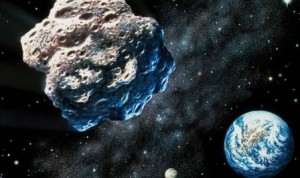
NEW YORK: NASA has discovered an asteroid that traveled unusually close to the Earth orbited by a smaller asteroid moon.

The small natural satellite was spotted in radar images taken by NASA’s Deep Space Network antenna located in California. NASA released a GIF composed of 20 images showing the pair of space rocks.


You might also like

Tesla driverless system to use updated radar technology

12/09/2016

Apple to develop its own self-driving technology

10/09/2016

At a distance of 745,000 miles, the asteroid’s approach was the closest it will get to Earth in at least the next two centuries, according to NASA’s Jet Propulsion Laboratory. It was also the nearest any rock of comparable size will get to the planet until 2027, when an asteroid called 1999 AN10 is expected to fly by.

The asteroid that just missed us, called 2004 BL86, is about 1,100 feet across. Its moon is about 230 feet across.

NASA has one of the most extensive programs in the world for surveying near-Earth objects (NEOs). The agency says 98% of the known NEOs were discovered by U.S. astronomers. Of the NEOs around the same size as BL86, about 16% have at least one moon in orbit around them; some even have two.

The space agency says it is constantly on the lookout to protect the planet from asteroids that might get dangerously close. Next year, it will send a robotic probe to one of the most potentially hazardous of the documented asteroids. That mission, OSIRIS-REx, is meant to serve as a dry run for spacecraft that might have to perform reconnaissance on NEOs that pose a threat in the future.

Besides the potential danger, comets and asteroids can also serve as a window into the origins of the solar system, water on Earth and maybe even the organic particles that eventually led to life, NASA says.

In the meantime, one question remained about the asteroid’s moon — and a famous former NASA astronaut was the one to pose it.


Related Stories

Tesla driverless system to use updated radar technology

byCT Report
12/09/2016

WASHINGTON: Electric carmaker Tesla announced Sunday it was upgrading its Autopilot software to use more advanced radar technology. In a...

Apple to develop its own self-driving technology

byCT Report
10/09/2016

SAN FRANCISCO: Apple may not become an automaker, but it still wants to develop its own self-driving technology. The iPhone-maker's...

NASA spots slowest known magnetar

byCT Report
10/09/2016

WASHINGTON: Astronomers have found evidence of a magnetar - magnetised neutron star - that spins much slower than the slowest...

‘YouTubers’ outshining old-school television

byCT Report
09/08/2016

SAN FRANCISCO: A media revolution is taking place, and most people over 35 years of age aren’t tuned in. Millennial...

Next Post

NZ dollar declines against Australian dollar, kiwi trades at 93.23 Australian cents

  • Terms and Conditions
  • Disclaimer

© 2011 Customs Today -World's first newspaper on customs. Customs Today.

No Result
View All Result
  • Transfers and Postings
  • Latest News
  • Karachi
  • Islamabad
  • Lahore
  • National
  • Chambers & Associations
  • Business
  • About Us

© 2011 Customs Today -World's first newspaper on customs. Customs Today.