Customs Today
  • Home
  • Islamabad
  • Karachi
  • Lahore
  • National
  • Transfers and Postings
  • Chambers & Associations
  • Business
No Result
View All Result
Customs Today
  • Home
  • Islamabad
  • Karachi
  • Lahore
  • National
  • Transfers and Postings
  • Chambers & Associations
  • Business
No Result
View All Result
Customs Today
No Result
View All Result
Home Science & Technology Science

Scientists abandon highly publicized claim about cosmic find

byCustoms Today Report
31/01/2015
in Science, Science & Technology
Share on FacebookShare on Twitter

NEW YORK: Scientists who made headlines last March by announcing that they’d found long-sought evidence about the early universe are now abandoning that claim.

NEW data show that their cosmic observations no longer back up that conclusion, they say.

You might also like

Tesla driverless system to use updated radar technology

12/09/2016

Apple to develop its own self-driving technology

10/09/2016

The original announcement last March caused a sensation because it appeared to show evidence that the universe ballooned rapidly a split-second after its birth, in what scientist call cosmic inflation.

That idea had been widely believed, but researchers had hoped to bolster it by finding a particular trait in light left over from the very early universe.

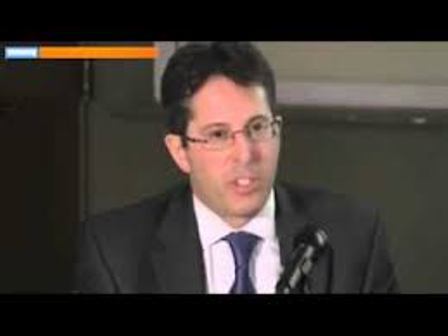
That signal is what the researchers claimed they had found in observations of the sky taken from the South Pole, in a project called BICEP2.But now, in a new paper submitted for publication, “we are effectively retracting the claim,” said Brian Keating of the University of California, San Diego, a member of the BICEP2 team.

“It’s disappointing,” he said in a telephone interview Friday after the European Space Agency publicised the results.

“It’s like finding out there’s no Santa Claus. But it’s important to know the truth.”

The new analysis was conducted by BICEP2 researchers plus scientists who worked with the European Planck satellite, which provided new data to help interpret the original observations

In essence, Keating said, the analysis shows that the source of the signal observed by BICEP2 isn’t necessarily the very early universe. Instead, it’s equally likely to have come from dust in our galaxy, which would mean it does not provide the evidence BICEP2 had claimed.

That possibility had been raised by other scientists soon after the announcement last March. When the BICEP2 team published its results in June it acknowledged it might have been fooled by the dust, but it still stood by its initial conclusions.

Keating said the search for the signal from the early universe would continue. And the new analysis has helped, he said, by showing how to avoid being misled by the galactic dust.


Tags: Brian Keatingclaim about cosmic findEuropean Space AgencySan DiegoScientists abandon highly publicized claimUniversity of Californiavery early universe

Related Stories

Tesla driverless system to use updated radar technology

byCT Report
12/09/2016

WASHINGTON: Electric carmaker Tesla announced Sunday it was upgrading its Autopilot software to use more advanced radar technology. In a...

Apple to develop its own self-driving technology

byCT Report
10/09/2016

SAN FRANCISCO: Apple may not become an automaker, but it still wants to develop its own self-driving technology. The iPhone-maker's...

NASA spots slowest known magnetar

byCT Report
10/09/2016

WASHINGTON: Astronomers have found evidence of a magnetar - magnetised neutron star - that spins much slower than the slowest...

‘YouTubers’ outshining old-school television

byCT Report
09/08/2016

SAN FRANCISCO: A media revolution is taking place, and most people over 35 years of age aren’t tuned in. Millennial...

Next Post

4.4b yrs old Martian meteorite found from Moroccan desert is planet's crust

  • Terms and Conditions
  • Disclaimer

© 2011 Customs Today -World's first newspaper on customs. Customs Today.

No Result
View All Result
  • Transfers and Postings
  • Latest News
  • Karachi
  • Islamabad
  • Lahore
  • National
  • Chambers & Associations
  • Business
  • About Us

© 2011 Customs Today -World's first newspaper on customs. Customs Today.