BRENT: The researchers presented evidence that the signal was born from primordial Gravitational waves, but this new research suggests the phenomenon may actually be caused by interstellar dust.
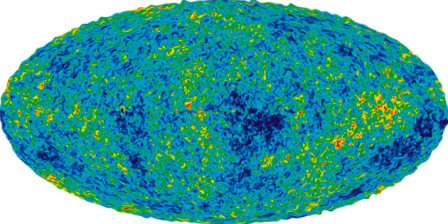
In 2014 a study looked at observations of the Cosmic Microwave Background (CMB), which is light left over from the Big Bang, the National Science Foundation reported. The findings revealed a signal that had never been detected before, “curly B-modes.”


Scientists have been searching for signatures of cosmic inflation, which is a theorized period of rapid expansion believed to have occurred in the early days of the universe. The signature would be linked to gravitational waves that would have been emitted during the inflationary phase; these waves would leave a mark in the CMBs polarization.
“Searching for this unique record of the very early Universe is as difficult as it is exciting, since this subtle signal is hidden in the polarization of the CMB, which itself only represents only a feeble few percent of the total light,” said Jan Tauber, ESA’s project scientist for Planck.
The recent findings suggest polarized emission from dust is significant over the entire sky, and could have been mistaken for the signal detected by BICEP2. “This joint work has shown that the detection of primordial B-modes is no longer robust once the emission from Galactic dust is removed,” said Jean-Loup Puget, principal investigator of the HFI instrument on Planck at the Institute d’Astrophysique Spatiale in Orsay, France. “So, unfortunately, we have not been able to confirm that the signal is an imprint of cosmic inflation.”