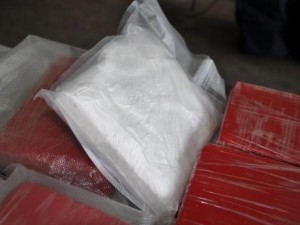
BUENOS AIRES: Argentine customs agents found about 30kg (66lb) of cocaine hidden in a way they had never seen before – drug-sniffing dogs found it had been absorbed into grains of rice headed for Europe via Africa, an official said here the other day.
The bust underscores the role Argentina has come to play as a shipping point for cocaine produced in Bolivia, Peru and Colombia, destined for Africa, and then smuggled north to the lucrative markets of Europe.


Imaginative drug runners soaked rice in water that had been mixed with cocaine, said Guillermo Gonzalez, chief of narcotic investigations for Argentina’s customs agency. When the water evaporated the rice was left invisibly “impregnated” with the addictive stimulant.
“It’s a new method,” Gonzalez said. “This is the first time we’ve seen technology this sophisticated.”
Rather than employing a chemical process to extract the cocaine from the rice once it reached its destination, Gonzales said the traffickers probably planned to grind the grains into fine powder and sell it as cocaine.
“Pure cocaine is too strong to be ingested without being cut with something. It may have been their plan to cut this shipment with the same rice that was used to carry it,” he said.
Twelve suspects, among them Argentines and Colombians, have been arrested in what people are calling “operation white rice”.
The scheme was discovered on 17 September when drug-sniffing dogs detected cocaine in a cargo of 50kg rice sacks at a warehouse in the port city of Rosario. It was kept secret for a week while security agents hunted for more suspects.
“The investigation indicates we have to keep looking. We know that these are international criminal organizations,” Gonzalez said.
The plan was to ship the cargo to Guinea-Bissau, a former Portuguese colony called by crime experts as Africa’s first “narco-state”. Each of the white sacks was stamped “country of origin: Argentina”.
The South American country is a major world food provider. On the banks of the Paraná river, Rosario, the birthplace of the iconic revolutionary Ernesto “Che” Guevara and soccer phenomenon Lionel Messi, is a departure point for millions of tonnes of soy, wheat and corn harvested from the Pampas grains belt.
But international drug enforcement officials have taken to calling Rosario “the Tijuana of Argentina” for what it has in common with the Mexican border city used to move cocaine into the US.
Experts say the drug enters Argentina by truck or plane from Andean cocaine-producing countries to the north. The smuggling routes narrow the closer shipments get to Rosario, increasing violent competition among gangs to control the final steps toward the Paraná river, leading south to Buenos Aires and shipping lanes of the Atlantic Ocean.
Drug-related killings spiked so high in Rosario last year that federal forces were called in to provide security.