
WASHINGTON: Associated British Ports (ABP), which operates the facilities at King’s Lynn and Ipswich, said extensive investment had helped both ports process their highest-ever number of exports during the month of August.
ABP said more than 47,400 tonnes passed through King’s Lynn on behalf of traders at Fengrain and Openfield, following upgrades to storage facilities and equipment which have doubled handling speeds from 75 to 150 tonnes per hour.
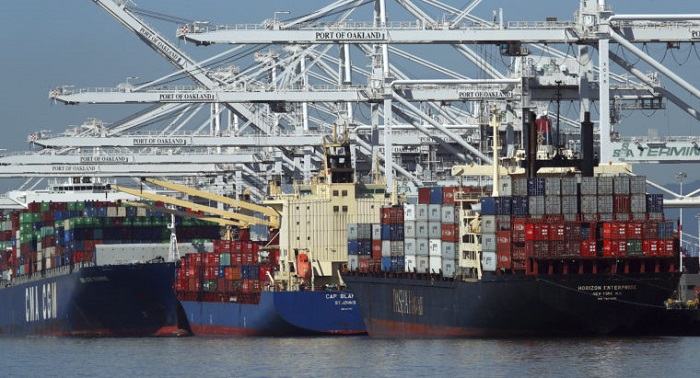

In Suffolk, a record-breaking 119,548 tonnes of grain were exported through Ipswich Grain Terminal and Clarkson Port Services facilities. The increase follows a £2.2m investment in the Orwell Bulk Terminal.
ABP Short Sea Ports director Andrew Harston said: “Our investment in the East Anglian ports is continuing to reap benefits. The record numbers we have seen in August are a testament to the roles that ports play in supporting not just the region’s farmers but the wider UK economy.”
David Doyle is head of trading at Openfield, a farmer-owned co-operative with a base at Bressingham, near Diss. He said: “It started as a good harvest, but it has been prolonged due to three weeks of rain which has slowed things slightly. But because the yields were good and activity was good early on, that is what has helped these good figures through the ports. “The market, unlike last year, which was dominated by deep sea activity, has been more intra-European this year, which suits the coaster traffic and smaller ports like King’s Lynn.
“The port has had a good refurb, and because the second half of the harvest was wet, and King’s Lynn has got handling and drying facilities, that suits producers who can take their grain to the port where it can be dried and exported.” However, merchants shipping through Norfolk’s only deep water port said the pace of exports needed to quicken if the total national wheat surplus was to be cleared.
Paul Dowson, a wheat trader at Gleadell Agriculture, which operates the grain terminal at Great Yarmouth’s outer harbour, said: “Our view is that with the big carry-over of stock from last year and another big crop this year, there will be a three million tonne exportable surplus of wheat, and we are not seeing that export programme at the moment. We think we’re about half a million tonnes down on where we need to be in order to dispose of the surplus. As a country, that is not a great start to the campaign.”