

Customs Today
  • Home
  • Islamabad
  • Karachi
  • Lahore
  • National
  • Transfers and Postings
  • Chambers & Associations
  • Business
No Result
View All Result
Customs Today
  • Home
  • Islamabad
  • Karachi
  • Lahore
  • National
  • Transfers and Postings
  • Chambers & Associations
  • Business
No Result
View All Result
Customs Today
No Result
View All Result
Home Uncategorized

Astronomers find giant black hole in early universe

byCustoms Today Report
27/02/2015
in Uncategorized
Share on FacebookShare on Twitter

You might also like

Pakistan to get $3b loan from Islamic Trade Financing Corporation

20/10/2024

Lahore I&I & Enforcement anti-smuggling operations achieve record success in early FY 2024-25

10/09/2024

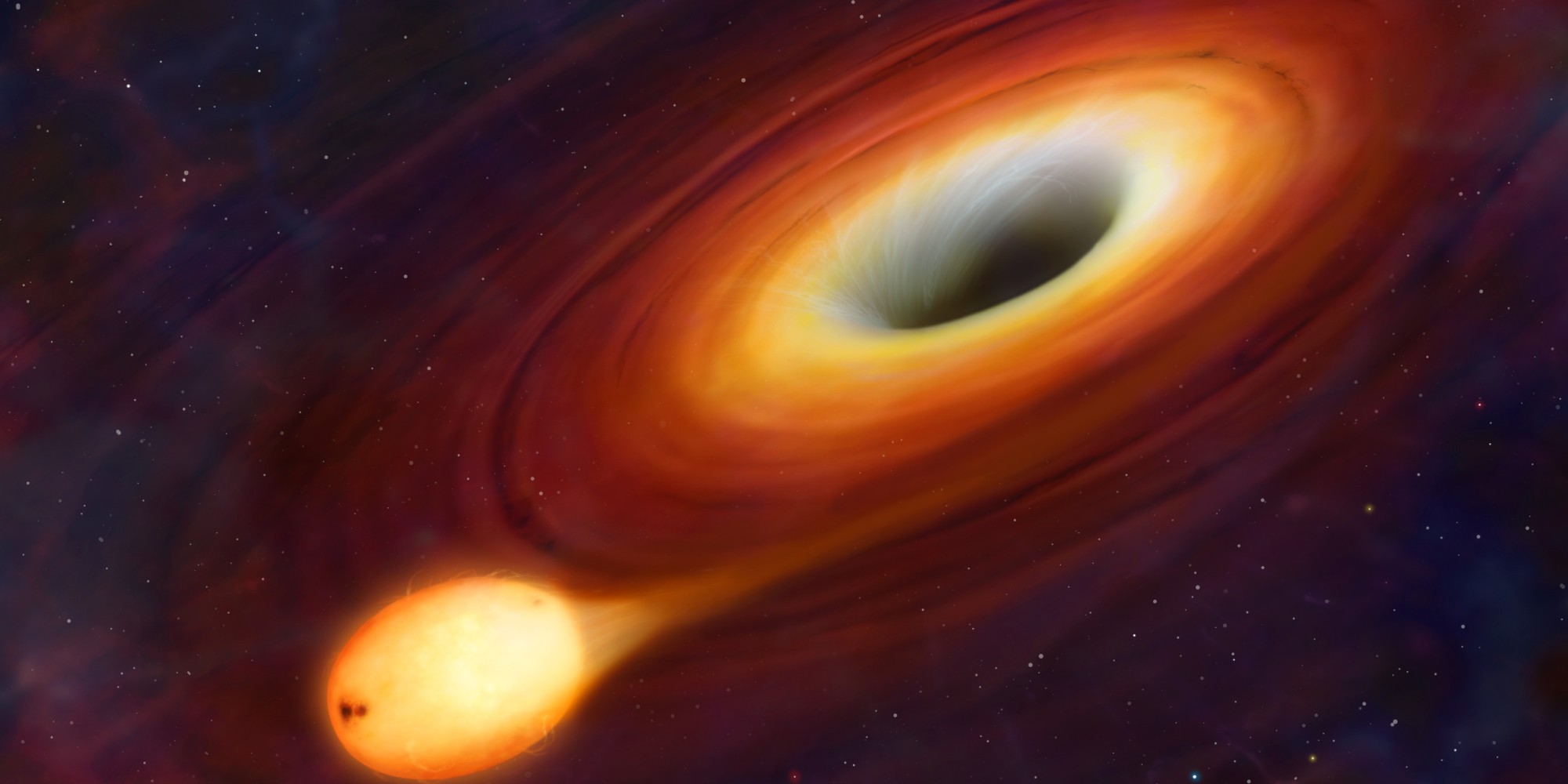
WASHINGTON: Space exploration continues to evolve and we, on earth, continue to be amazed at what astronomers and engineers continue to find. A recent discover, for example, from Chinese astronomers will confound both the brightest scientists and all the rest of us alike.
Chinese astronomers have found a quasar with the mass 12 billion times that of our yellow sun.
A University of Arizona report describes, “The existence of such massive black holes in the early universe posts significant challenges to the theory of black hole growth and its relation to galaxy evolution.”
Lead study researcher Xue-Bing Wu of Peking University in Beijing, adds, “Our discovery presents a serious challenge to theories about the black hole growth in the early universe.”
Wu goes on to say, “It may require either very special ways to grow the black hole within a very short time or the existence of a huge seed black hole when the first generation stars and galaxies formed. Both are difficult to be explained by the current theories.”
Wu continues, “This quasar is unique. We are so excited, when we found that there is such luminous and massive quasar only 0.9 billion years after the Big Bang. Just like the brightest lighthouse in the distant universe, its glowing light will help us to probe more about the early universe.”
Similarly, Bram Venemans of the Max Planck Institute for Astronomy, attests “These giants of the universe will provide the ideal targets from which to learn about the universe during the first few hundred million years after the Big Bang.”
More interestingly, though, black holes continue to grow, eating up stars and other space objects in its wake—so this is one we will certainly have to continue to watch.

Tags: Astronomers findblack hole in early universeBram Venemansgiant black holeMax Planck Institute for AstronomyUniversity of Arizona

Related Stories

Pakistan to get $3b loan from Islamic Trade Financing Corporation

byCT Report
20/10/2024

ISLAMABAD: Islamic Trade Financing Corporation (ITFC) to provide Pakistan with a $3 billion loan, according to an official statement released...


Lahore I&I & Enforcement anti-smuggling operations achieve record success in early FY 2024-25

byCT Report
10/09/2024

LAHORE:  Regional Directorate of Customs Intelligence & Investigation has demonstrated exceptional performance in the first two months of the fiscal...

ICCI and CDA to join hands for tree plantation drive in Capital

byQaisar Mansoor
09/08/2023

ISLAMABAD: Islamabad Chamber of Commerce and Industry (ICCI) in collaboration with the Capital Development Authority (CDA) would jointly launch a...

Customs Officials Yawar Abbas & Tariq Mehmood kidnapped in Karachi

byCT Report
08/07/2023

KARACHI: Customs Intelligence Officer Yawar Abbas and Customs Preventive Officer Tariq Mehmood who were working against smuggling were kidnapped by...

Next Post

QMobile introduces LINQ with 1.3 GHz Quad Core processor, 4 GB ROM 512 MB RAM

  • Terms and Conditions
  • Disclaimer

© 2011 Customs Today -World's first newspaper on customs. Customs Today.

No Result
View All Result
  • Transfers and Postings
  • Latest News
  • Karachi
  • Islamabad
  • Lahore
  • National
  • Chambers & Associations
  • Business
  • About Us

© 2011 Customs Today -World's first newspaper on customs. Customs Today.