Customs Today
  • Home
  • Islamabad
  • Karachi
  • Lahore
  • National
  • Transfers and Postings
  • Chambers & Associations
  • Business
No Result
View All Result
Customs Today
  • Home
  • Islamabad
  • Karachi
  • Lahore
  • National
  • Transfers and Postings
  • Chambers & Associations
  • Business
No Result
View All Result
Customs Today
No Result
View All Result
Home Science & Technology Science

Astronomers measure stellar pulse to determine galaxies age

bySana Anwar
18/11/2015
in Science, Science & Technology
Share on FacebookShare on Twitter

EUROPE: Researchers from Yale and Harvard universities measured, for the first time, the pulse of red stars. The heart-pounding study analyzed how light in nearby galaxy is affected by the stellar pulse.

Giant stars like the Sun go through substantial changes over time. Giant stars grow brighter and expand enormously, causing them to swallow nearby planets. Towards the end of their lifetime, they start to throb which makes their light increase and decrease in brightness every several hundred days. Many stars in the Milky Way galaxy are in this phase of their lifetime.


You might also like

Tesla driverless system to use updated radar technology

12/09/2016

Apple to develop its own self-driving technology

10/09/2016

People tend to think galaxies as static beacons, however, galaxies actually ‘shimmer’ because of all the pulsating giant stars in it, explained co-author and Sol Goldman Professor Pieter van Dokkum, who is also Yale’s Chair of Astronomy. It was only recently that the effects of these pulsating stars have on the light originating from distant galaxies have been measured and analyzed. The light of pulsating stars in distant galaxies is mixed with more light coming from stars that do not ‘pulsate’.

“We realized that these stars are so bright and their pulsations so strong that they are difficult to hide. We decided to see if the pulsations of these stars could be detected even if we could not separate their light from the sea of unchanging stars that are their neighbors,” said lead researcher and Harvard assistant professor Charlie Conroy.

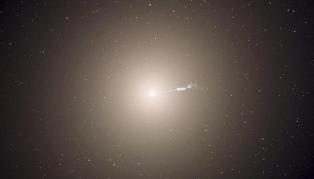
Using three months’ worth of Galaxy M87 photos taken by the Hubble Space Telescope in 2006, the researchers found that 25 percent of the images have varying degrees of brightness, suggesting a ‘pulse’. The team found that the Galaxy M87’s stars has an average pulse of one beat every 270 days.


Related Stories

Tesla driverless system to use updated radar technology

byCT Report
12/09/2016

WASHINGTON: Electric carmaker Tesla announced Sunday it was upgrading its Autopilot software to use more advanced radar technology. In a...

Apple to develop its own self-driving technology

byCT Report
10/09/2016

SAN FRANCISCO: Apple may not become an automaker, but it still wants to develop its own self-driving technology. The iPhone-maker's...

NASA spots slowest known magnetar

byCT Report
10/09/2016

WASHINGTON: Astronomers have found evidence of a magnetar - magnetised neutron star - that spins much slower than the slowest...

‘YouTubers’ outshining old-school television

byCT Report
09/08/2016

SAN FRANCISCO: A media revolution is taking place, and most people over 35 years of age aren’t tuned in. Millennial...

Next Post

SECP registers third party administrator for health insurance services

  • Terms and Conditions
  • Disclaimer

© 2011 Customs Today -World's first newspaper on customs. Customs Today.

No Result
View All Result
  • Transfers and Postings
  • Latest News
  • Karachi
  • Islamabad
  • Lahore
  • National
  • Chambers & Associations
  • Business
  • About Us

© 2011 Customs Today -World's first newspaper on customs. Customs Today.