
Customs Today
  • Home
  • Islamabad
  • Karachi
  • Lahore
  • National
  • Transfers and Postings
  • Chambers & Associations
  • Business
No Result
View All Result
Customs Today
  • Home
  • Islamabad
  • Karachi
  • Lahore
  • National
  • Transfers and Postings
  • Chambers & Associations
  • Business
No Result
View All Result
Customs Today
No Result
View All Result
Home Science & Technology Science

Astronomers recently discover “ultrafast” star that travel 1,200km per second

byCustoms Today Report
10/03/2015
in Science, Science & Technology
Share on FacebookShare on Twitter

You might also like

Tesla driverless system to use updated radar technology

12/09/2016

Apple to develop its own self-driving technology

10/09/2016

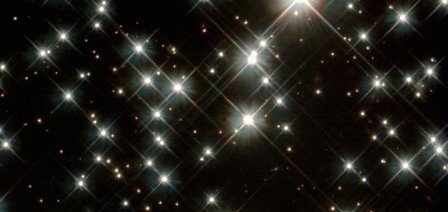
MEXICO: Astronomers have recently discovered an ultrafast star travelling at a speed of 1,200 kilometers per second (26 million mph), the speed which astronomers say will enable it to escape from Milky Way.
The team of astronomers, including University of Hawaii at Manoa astronomer Eugene Magnier, used the 10-meter Keck II and Pan-STARRS1 telescopes in Hawaii to find a star that breaks the galactic speed record.
The team showed that unlike the half-dozen other known escaping stars, this compact star was ejected from an extremely tight binary by a thermonuclear supernova explosion.
Stars like the sun are bound to Earth’s galaxy by its gravity and orbit its center at relatively moderate velocities, tens to a few hundreds of kilometers per second. Only a few so-called hypervelocity stars are known that travel so fast that they are unbound.
A close encounter with the supermassive black hole at the center of the Milky Way was usually considered the most plausible mechanism for enabling these stars to escape from the galaxy.
Stephan Geier (European Southern Observatory, Garching, Germany) led the team that observed the known high-velocity star, US 708, with the Echellette Spectrograph and Imager on the Keck II telescope to measure its distance and radial velocity component, that was, how fast it was moving away from Earth.
By carefully combining position measurements from digital archives with newer positions measured from images taken during the Pan-STARRS1 survey, they were also able to derive the tangential component of the star’s velocity, or how fast it was moving perpendicular to Earth.

Tags: 200km per secondAstronomers recently discover “ultrafast”Echellette Spectrograph and ImagerEugene MagnierMilky Waytravel 1University of Hawaii at Manoa“ultrafast” star

Related Stories

Tesla driverless system to use updated radar technology

byCT Report
12/09/2016

WASHINGTON: Electric carmaker Tesla announced Sunday it was upgrading its Autopilot software to use more advanced radar technology. In a...


Apple to develop its own self-driving technology

byCT Report
10/09/2016

SAN FRANCISCO: Apple may not become an automaker, but it still wants to develop its own self-driving technology. The iPhone-maker's...

NASA spots slowest known magnetar

byCT Report
10/09/2016

WASHINGTON: Astronomers have found evidence of a magnetar - magnetised neutron star - that spins much slower than the slowest...

‘YouTubers’ outshining old-school television

byCT Report
09/08/2016

SAN FRANCISCO: A media revolution is taking place, and most people over 35 years of age aren’t tuned in. Millennial...

Next Post

Denmark exports to Germany to rise by 10 billion kroner in 2015-2016

  • Terms and Conditions
  • Disclaimer

© 2011 Customs Today -World's first newspaper on customs. Customs Today.

No Result
View All Result
  • Transfers and Postings
  • Latest News
  • Karachi
  • Islamabad
  • Lahore
  • National
  • Chambers & Associations
  • Business
  • About Us

© 2011 Customs Today -World's first newspaper on customs. Customs Today.