PARIS: Armed with one of the largest telescopes in the world, the aptly named Very Large Telescope at the ESO Observatory in Chile, astronomers are conducting a search for what they once were certain had to be a brown dwarf star. The only problem is that now the star seems to have vanished without evidence.
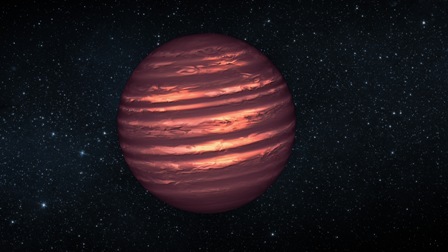
What happened? Brown dwarfs, compared to their better known red dwarf counterparts are significantly cooler, dimmer objects which at a glance bear more resemblance to planets than to other stars.


Although they release heat and bear a chemical composition similar to that of the sun, astronomers tend to refer to them as “failed stars,” since they are too small to set off any thermonuclear reactions within their cores. This particular vanishing dwarf was thought to be part of a double-star system, the V471 Tauri, located within the Taurus constellation, only 163 light years from Earth. Within this system, the stars orbit each other in 12 hour intervals, which cause the brightness to diminish every six hours, when one star crosses directly in front of the other.