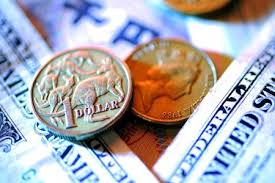
CANBERRA: The Australian dollar is weaker after strong US economic data lifted the greenback.
The Australian currency was worth 77.15 US cents at 1700 AEST, down from 77.39 cents on Tuesday.


CMC chief markets analyst Michael McCarthy said the local currency had traded in a tight range and effectively moved sideways after making slight gains on Wednesday.
“Overall it’s been a pretty resilient performance, particularly given the US dollar strength we’ve seen against the euro, so while we are lower than we were yesterday we haven’t fallen nearly as much as some other currencies,” Mr McCarthy said.
US existing home sales rose at a better than expected rate of 5.1 per cent in May, beating economists’ expectations, which helped the US dollar be the best performing currency in offshore trade.
The release of better than expected manufacturing data in Japan, China and France and stronger commodities prices had supported the local currency over the past 24 hours, Mr McCarthy said.
The HSBC manufacturing index for China showed that activity in the sector was contracting at a slower rate, and the result was slightly better than expected.
On Tuesday night US time, Jerome Powell, who is on the US Federal Reserve’s board of governors, will give a speech in Washington on monetary policy.
At 1700 AEST, the Australian dollar was buying 95.80 Japanese yen, up from 95.75 yen on Tuesday, and 69.05 euro cents, up from 68.44 euro cents.
The Australian bond market is slightly firmer as investors wait for news on the debt crisis in Greece. NAB fixed interest strategist Skye Masters said bond prices drifted higher in morning trade and settled in the afternoon.
“Nothing was coming out domestically to move the market and we’re just waiting to see what happens with Greece,” Ms Masters said. “There’s a bit of fatigue.”
It came after US Treasuries prices weakened due to hopes of a resolution to the ongoing crisis in Europe over Greece’s stalled debt negotiations.