CANBERRA: Australian shares fell 2.3% today as Greece’s financial difficulties continue, but how significant is Australia’s exposure to the troubled eurozone member. According to CommSec chief economist Craig James, the answer is, not very. “Australia has minimal exposure to Greece,” James said today.
Commonwealth Bank chief economist, Michael Blythe, agreed the Greek economy has “limited economic linkages” with Australia.


Greece is Australia’s 68th largest trading partner with two-way trade in goods worth $203m per annum, said Blythe. Services trade, reflecting education exports and holiday imports, is worth another $400m.
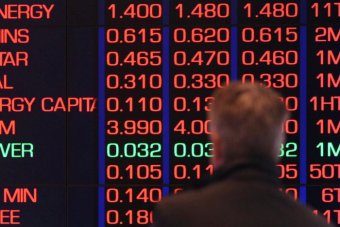
However, the benchmark S&P/ASX 200 index closed 123.4 points, or 2.3%, lower at 5422.50 on Monday as jittery investors reacted to news Greece has shut its banks to prevent a run on the system – essentially, mass withdrawals.
“It’s just fear and uncertainty which is driving markets at the moment. Unfortunately, we can’t disengage ourselves from the rest of the world,” James said, adding Japan’s share market was more 2.2% lower and China was down nearly 4%.
Greece’s decision to shut its banks for up to a week followed the European Central Bank’s (ECB) announcement it would not extend emergency funding to Greece.
Athens is currently unable to repay the International Monetary Fund (IMF) the 1.6bn euros it owes by Tuesday, 30 June.
Elsewhere, the governor of Puerto Rico said on Sunday its government cannot repay debts of approximately US$72bn, which has added to global investor uncertainty.
IMF research has shown Australia was less exposed than other countries to euro zone problems because of its relationship with Asia, Blythe noted today.
David Bryant, chief investment officer at Australian Unity, said despite the tense negotiations in Greece, investors shouldn’t necessarily feel discouraged about global financial markets. “Generally speaking, the eurozone seems to be finding its feet,” Bryant said.
“The 0.4 percent growth in GDP in the last quarter is well-balanced between consumption, exports, public and private, which is a positive sign.
“Meanwhile, the US continues to motor along, with job openings hitting 5.4m – a record since data started in 2000,” he said. Durable goods orders, new home sales and small business confidence measures in the US have all risen. CommSec’s James cautioned against knee-jerk reactions.
“These events do come along from time to time. If you let them envelope you, you can get caught up and end up making some bad mistakes,” James said.
“Some investors will look at this as a buying opportunity and gain entry into the market at lower levels.”
Of course, it’s important to remember there are never any guarantees of how markets will perform.
Investors that seek to ‘time the market’ and buy when prices are falling should always keep in mind that even the professionals cannot definitively predict what events will happen next and how they will impact share prices.