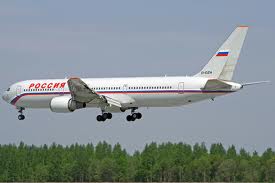
MOSCOW: Boeing is talking to Russian airline customers about potential changes in their fleet development as that country’s aviation industry suffers from the effects of a weak currency, slow economic growth and Western sanctions.
The ruble’s decline of more than 40 percent against the dollar since March will make payments for aircrafts significantly more expensive for Russian carriers as plane sales are denominated in the U.S. currency. Russian airlines are also grappling with weaker travel demand as sanctions imposed by the U.S. and European Union hit businesses and consumers.


“Some of the airlines are struggling greatly,” said John Wojick, Boeing’s senior vice president for global sales. “It’s really dropped off for them.”
Wojick said that Boeing regularly discusses potential changes in scheduled deliveries with carriers around the world as they encounter difficulties or as fleet needs evolve because of changes in a marketplace or at the airline.
Manufacturers begin working on single-aisle planes almost 12 months before delivery, and on widebody planes 18 months before delivery, so any changes made in scheduling need to be arranged well before the actual delivery.
That means any airlines with jet deliveries for 2015 will have to take delivery of those planes because it’s too late for the manufacturers to change schedules. Only deliveries from 2016 could be a subject for discussion, he said, adding that no Russian airline at this point has asked to defer deliveries.
Russia accounts for less than 10 percent of Boeing’s total commercial aircraft sales, Wojick said. The difficulties encountered in that market this year are no worse than problems faced in any of a number of troubled markets from one year to the next, he said.
Boeing is not the only company seeking to accommodate plane deliveries bound for Russia. AerCap Holdings Chief Executive Officer Aengus Kelly said earlier this week in an interview that the lessor took nine planes out of Russia over the Christmas period and is finding other homes for them.
Wojick declined to say how many deliveries are scheduled for Russia in 2015 or 2016.