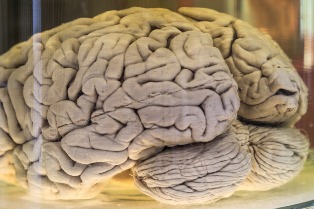

HONG KONH: New research shows that brain scans can fairly accurately predict just how intelligent we are. Or at least, how good we are at abstract reasoning, which is much of what makes a person seem smart.
The researchers call it “fluid intelligence,” but it’s basically a term for how well our brain talks to itself, how quickly it can form connections between concepts and stimuli. Here’s a classic example: Look at the sentences below.
You can probably answer the first question faster. Bats are like birds in that they can fly. (Or maybe you’re a real smartass, and you said they have wings, or have good night vision.) The second question might have taken you an extra second or two: Bats are like cats in that they are both mammals. The neuroconnection between bats and “flying” is very strong. The connection between bats and “mammals” is a bit weaker. People with strong “fluid intelligence” have stronger connections between concepts—in this example, perhaps they associate bats with being mammals almost as strongly as they associate bats with flight.
And these connections in the brain can actually be seen on a brain scan. You would guess that scientists could spot them the best if the person was actually engaging in some sort of mental activity (say, the bat experiment above), but it turns out that the person can be doing anything, even resting, and the experimenters could see these neuro-connections. Similarly, Albert Einstein’s brain, which was famously harvested after his death, shows incredibly strong brain connectivity, which may account for his legendary intelligence.

Tesla driverless system to use updated radar technology
WASHINGTON: Electric carmaker Tesla announced Sunday it was upgrading its Autopilot software to use more advanced radar technology. In a...