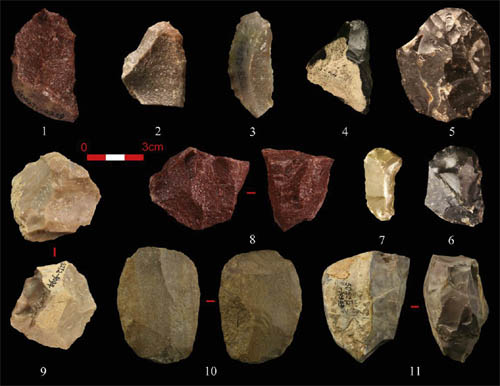

PARIS: Scientists have just discovered the oldest stone tool ever in Turkey, a find that’s shedding light on the movements of early humans in the area, a new study says.
The team, from Royal Holloway, University of London, as well as an international team from the UK, the Netherlands and Turkey, said their chance find of a humanly-worked quartzite flake in western Turkey, in ancient deposits of the Gediz river, gave scientists a much better understanding of how early humans ventured out of Africa and Asia.
The research has been published in the journal Quaternary Science Reviews.
The scientists used high-precision measuring equipment to date the deposits of the ancient river meander, giving the first accurate timeframe for when the area was occupied by humans.
Professor Danielle Schreve, who works at the Department of Geography at Royal Holloway, said:
“This discovery is critical for establishing the timing and route of early human dispersal into Europe. Our research suggests that the flake is the earliest securely-dated artefact from Turkey ever recorded and was dropped on the floodplain by an early hominin well over a million years ago.”

Tesla driverless system to use updated radar technology
WASHINGTON: Electric carmaker Tesla announced Sunday it was upgrading its Autopilot software to use more advanced radar technology. In a...