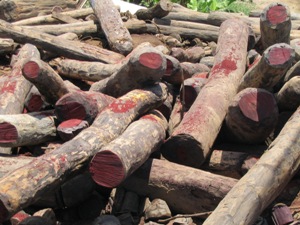
PHNOM PENH: In the first nine months of 2015, exports of Cambodian rosewood to China – the Kingdom’s largest market for the protected species – have declined by as much as 95 per cent compared with the same period last year, data released by NGO Forest Trends show.
China has registered a major drop in rosewood imports from Mekong region countries in 2015 following years of speculation on high-value hardwood species, a Communist Party anti-corruption drive and a trend towards less expensive softwood furniture, according to the forest monitor’s recent report, titled China’s Hongmu Consumption Boom.


By contrast, African countries such as Mali, Gambia and Cameroon registered increased rosewood exports to China, which has seen a boom since 2010 in the production of faux antique rosewood furniture known as hongmu – a term which also refers to the high-value hardwood species themselves.
The boom seemingly peaked in 2014 when the value of imports nearly doubled compared with the year before, from $1.4 billion to $2.6 billion. The craze for expensive hongmu products since 2010 has elevated certain hardwood species – including species logged extensively in Cambodia – to the status of precious metals in terms of their ability to retain value, with wood sometimes hoarded like heirloom jewellery.
“The increasing rarity of the high-quality rosewood materials has led to stockpiling of logs even by individual Chinese households, creating highly speculative markets which are nonetheless deemed more safe or profitable than bank savings accounts or the often-volatile stock market,” Forest Trends said. “In Asia, transnational organised crime syndicates have emerged to exploit this highly profitable commodity, challenging efforts to preserve remaining rosewood stocks.”
As the availability of high-quality, large hardwood trees – such as Siamese rosewood – has declined sharply in countries like Cambodia since 2010, China has increased African rosewood imports by 700 per cent, according to Forest Trends, despite the timber being of lower quality.
Vietnam reported imports of sawn Cambodian timber worth $257 million in 2014 – three times as much as was reported in 2013 – including almost 6,000 cubic metres of Siamese rosewood, the collection, transportation and export of which was banned in Cambodia in early 2013.
“There is strong evidence that this booming demand is being met by rosewood that has been illegally harvested, with dire consequences for complex ecosystems in some of the world’s most biodiverse forests,” said Forest Trends’ Naomi Basik Treanor, who authored the report.
“Many countries in Africa and Asia ban the harvest or export of rosewood logs, yet these products are still making their way across China’s borders. In many cases, this demand has also adversely impacted the livelihoods of forest-dependent people who rely on hongmu as a source of fuel and medicine.”
Chheng Kimsun, director of the Forestry Administration, and a spokesman for the Chinese Embassy, did not respond to requests for comment yesterday. Much of the timber exported from Cambodia is routed through Hong Kong or Vietnam to circumvent a longstanding ban on exports of unprocessed logs.
Importers utilising this so-called “express trade” route are able to avoid value-added tax while still shipping their product to China’s special economic zones or port cities on Guangdong province’s Pearl River Delta, according to the report.
“Given their role in the global trade of rosewood, China’s consumers and government are in a unique position to take a leadership role in ensuring that only legally and sustainably sourced rosewood enters the country,” Kerstin Canby, director of Forest Trends’ forest trade and finance program, said.
“China already has in place some existing frameworks related to the sale of rosewood, as well as emerging systems to verify the legal provenance of timber importers, and these could serve as a foundation for more robust and legally binding legislation to curb illegal timber imports.”