TORONTO: Canada’s successful future in energy exports will be found in Asia and trade agreements such as the Trans-Pacific Partnership (TPP) open new trade doors for Canada, they don’t represent the sum of what we should be reaching for on energy exports.
A country with a strong rule of law, well-educated workforce and reliable transportation infrastructure, Taiwan sits at the centre of all trade in Asia. It’s poised to be a natural trade partner as Canada expands its energy export market.


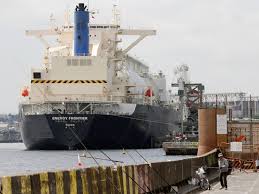
The Taiwan Matters to Canada’s Economic Future, concludes that Taiwan is an essential future trading partner for Canada. Taiwan, Canada’s fourth-largest trading partner in Asia, depends heavily on energy imports, primarily natural gas. Practically all of the energy that country uses oil, coal and natural gas must be imported. The opportunity for Canada and specifically British Columbia hinges on the development of a viable liquefied natural gas (LNG) export industry.
In 2012, Taiwan imported nearly 600 billion cubic feet of liquefied natural gas, making it the sixth-largest importer globally. Demand for LNG in Taiwan is rising as the country moves away from nuclear power and increasingly views natural gas as a “transition fuel” to a low-carbon economy. Taiwan’s state-owned CPC Taiwan is the only importer of LNG in the country, with two LNG import facilities in operation and a third planned for the near future.
Depending on the future trajectory of LNG development in Canada and a host of other factors notably the price of Canadian LNG versus other exporting regions growth can be nurtured in this area of trade.
There is also undeniable potential in the renewable energy trade between our two countries. Renewable energy accounts for less than 2% of Taiwan’s total energy mix, but there is political desire and will in the country to boost that number.
The government of Taiwan has expressed its desire to move towards a low-carbon economy as it believes its current trajectory is unsustainable. According to a 2013 paper by Tamkang University researchers Huei-Chu Liao and Sih Ting Jhou, “the reliance on imported energy, expensive subsidies, high-volume greenhouse gas emissions, lack of advanced technology and lack of international co-operation combine to create an impending energy crisis for Taiwan.”
In November 2013, the government of Ontario hosted a clean-technology mission to several Asian countries including Taiwan. The trip helped match Taiwanese buyers with Ontario-based clean-tech firms representing an array of technologies, from energy metering equipment to waste-water treatment systems. These kinds of connection opportunities must continue to foster growth on the renewable side of the energy ledger as well.
Trade in the area of Canada’s traditional energy exports can not only help support new energy exports for Canada, but also foster a strong, forward-looking trade relationship for the 21st century.
Freer access to Taiwan’s markets would create investment opportunities, increase demand for Canadian goods and services and facilitate partnerships for Canadian innovators looking to sell their products. Taiwan’s accession to the TPP would benefit Canada, Taiwan and all TPP partners.