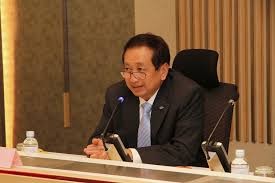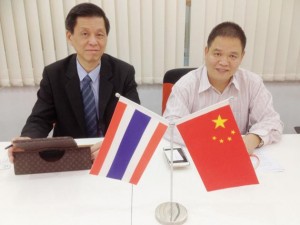
BANGKOK: Xu Gen Luo chairman of Thai-Chinese Rayong Industrial Realty Development Co has said that we have invested $1.2 billion in our industrial zone so far in the first and second phases. Currently, there are more than 60 manufacturers in the industrial park, occupying total land area of 2,000 rai.
Most of them are in such industries as electronics, motorcycles, vehicle parts, and renewable energy industries like solar panels. They have employed about 1,000 Chinese workers as well as 10,000 Thai workers.”Thailand is set to be a strategic investment destination for Chinese companies, not only to cash in on a huge domestic market, but also using the Kingdom as springboard to export products to Asean and other markets around the world.


However, Thailand needs to improve the efficiency of government services as the processing of work permits and visas for foreign firms that want to set up operations here, as well as helping them lower their production costs, one Chinese investor says. Xu Gen Luo, chairman of Thai-Chinese Rayong Industrial Realty Development Co, said that with the rapid development of China’s economy, its companies had been integrating more and more with the world economy.
Despite its higher production costs compared with China, Thailand has other strengths make it an attractive country in which to invest. The main factor is Chinese manufacturers’ desire to enrich their products’ diversity of origin. They also want to expand their business into the Thai market and use this country as an export springboard into global markets. Moreover, Chinese companies want to take advantage of the Kingdom’s resources such as rubber.
Xu added that about 60 per cent of the estate’s products were exported to many markets around the world, particularly the US and Europe.”We plan to add another 1,000 rai initially in our Phase 3, which will start this year, and will add another 200 factories in our industrial estate. Industries specialising in renewable energy and high-technology products will be the new focuses, he said, noting that with its relatively high costs of production, Thailand needed to concentrate on high-value-added industries. He said this year marked the 40th anniversary of the establishment of diplomatic relations between China and Thailand. It is apparent that the cooperation between the two countries, such as on the economy, politics, culture, and communications, has stepped into a new stage. China is now Thailand’s No 1 trading partner and importer of its products. Chinese investment in Thailand last year totalled Bt38 billion. Xu said the government needed to improve the efficiency of its visa and work-permit processing to attract more foreign investors.
As well, as the Asean Economic Community becomes fully effective this year, affecting the movement of the regional labour market, Thailand should be doing something to bring down its production costs.”We are looking forward to the AEC,” he said, adding that Asean could become a mutually complementary and beneficial ecosystem in terms of resources, capital, trade and labour. He said the government’s railway project would be mutually beneficial to China and Thailand. Its significance is not only economic but also in politics and culture.