
Customs Today
  • Home
  • Islamabad
  • Karachi
  • Lahore
  • National
  • Transfers and Postings
  • Chambers & Associations
  • Business
No Result
View All Result
Customs Today
  • Home
  • Islamabad
  • Karachi
  • Lahore
  • National
  • Transfers and Postings
  • Chambers & Associations
  • Business
No Result
View All Result
Customs Today
No Result
View All Result
Home Science & Technology Science

Climate change forces polar bears to shift toward places with prey & mates

byCustoms Today Report
12/01/2015
in Science, Science & Technology
Share on FacebookShare on Twitter

You might also like

Tesla driverless system to use updated radar technology

12/09/2016

Apple to develop its own self-driving technology

10/09/2016

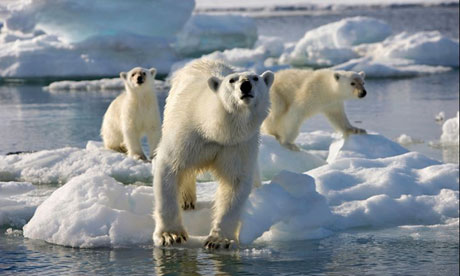
MAXICO: According to a new research loss of sea ice and other dramatic changes in habitat are causing the polar bear to shift its populations to colder regions.
A gradual shift in bear population distributions has been noted by Elizabeth Peacock, a US Geological Society researcher.
Over the last 15 to 45 years polar bears have shifted their distribution more toward the Canadian Archipelago, which is north of the Canadian mainland in the Arctic.The study is published in the latest issue of PLOS ONE, reports Discovery.
“Sea ice is like a moving sidewalk and they travel with it,” Peacock says. “Bears likely move towards places with better access to prey and mates.”
A directional gene flow from south, east and west towards the Canadian Archipelago was noticed in DNA analysis of four genetically similar clusters of polar bears identified by their location.
Sea ice is used by the bears as a platform for access to prey (seals), for migration, mating and raising cubs. Loss of ice results in bears having to swim greater distances in open water. It also means longer periods of not eating while on land.
A recent study on sea ice projections for the Canadian Arctic Archipelago had showed that the region may see two to five months of ice-free conditions, spurring the decline of the polar bear population.
By 2070, more than 80% of the archipelago’s ice could break up by July each year, forcing pregnant females to retreat to land prematurely, lacking sufficient fat reserves to support pregnancy and nursing.
Whales and walruses have also been noticed to move further north under reduced ice cover. Moving into a new habitat could have unseen impacts on the new ecosystems occupied, say scientists.

Tags: bear population distributionBears adapting to ice lossCanadian Arctic ArchipelagoClimate ChangeClimate change forces polar BearsClimate change forces polar Bears adapting to ice lossElizabeth PeacockUS Geological Society

Related Stories

Tesla driverless system to use updated radar technology

byCT Report
12/09/2016

WASHINGTON: Electric carmaker Tesla announced Sunday it was upgrading its Autopilot software to use more advanced radar technology. In a...


Apple to develop its own self-driving technology

byCT Report
10/09/2016

SAN FRANCISCO: Apple may not become an automaker, but it still wants to develop its own self-driving technology. The iPhone-maker's...

NASA spots slowest known magnetar

byCT Report
10/09/2016

WASHINGTON: Astronomers have found evidence of a magnetar - magnetised neutron star - that spins much slower than the slowest...

‘YouTubers’ outshining old-school television

byCT Report
09/08/2016

SAN FRANCISCO: A media revolution is taking place, and most people over 35 years of age aren’t tuned in. Millennial...

Next Post

Asian currencies increase largely after US jobs data

  • Terms and Conditions
  • Disclaimer

© 2011 Customs Today -World's first newspaper on customs. Customs Today.

No Result
View All Result
  • Transfers and Postings
  • Latest News
  • Karachi
  • Islamabad
  • Lahore
  • National
  • Chambers & Associations
  • Business
  • About Us

© 2011 Customs Today -World's first newspaper on customs. Customs Today.