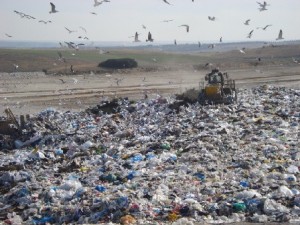

KARACHI: Unabated coastal pollution has emerged as a serious health risk posed by the bio-accumulation of chemical pollutants in the food chain and this is needed to be urgently contained through policy implementation and mega sewage treatment schemes, said participants of the 13th meeting of National Coordinating Body of Mangroves for the Future Programme (MFF) Pakistan.
The meeting chaired by Secretary, Ministry of Climate Change, Arif Ahmed Khan was attended by Regional Director, IUCN Asia, Aban Marker Kabraji and representatives of the provincial government agencies of Sindh and Balochistan, the private sector, NGOs, academia and research institutions.
The participants were of the view that current efforts were insufficient and needed to be more coordinated so as to ensure that marine life is protected against any further damage while livelihood of concerned communities was also duly protected.
Secretary Arif Ahmed Khan underscored the role of coastal government agencies in this respect and also called for steps to integrate environmental concepts into existing academic curriculums. Regional Director, IUCN Asia, Aban Marker Kabraji explaining the levels of pollution along the Karachi coast, said that due to increased pollution along the coast, marine animals such as shellfish and crabs when eaten pose serious health risks to human as they absorb most of the pollution coming into the sea.
Explaining an MFF-funded crab-fattening project, Kabraji said, there is considerable potential in Pakistan to promote organic seafood farming through private-sector engagement and linking producers with international buyers to generate price premium for the coastal communities through such ventures.

Tesla driverless system to use updated radar technology
WASHINGTON: Electric carmaker Tesla announced Sunday it was upgrading its Autopilot software to use more advanced radar technology. In a...