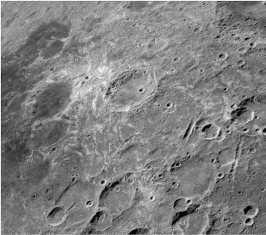

BRENT: According to a research paper recently published in the journal Icarus, crashing comets may be responsible for the moon’s features. A research team out of Brown University in Providence, Rhode Island, has solved the mystery behind the unusually swirled areas on the moon’s surface. They attribute the moon’s swirls to crashing comet collisions.
According to a research paper recently published in the journal Icarus, crashing comets may be responsible for the moon’s features. A research team out of Brown University in Providence, Rhode Island, has solved the mystery behind the unusually swirled areas on the moon’s surface. They attribute the moon’s swirls to crashing comet collisions.
Researchers Peter Schultz and Megan Bruck-Syal have tried to estimate the impact of crashing comets on the moon’s soil. Usually specially-designed computer simulation models to analyze the nature of the lunar swirls.
While Schultz, a planetary geoscientist at Brown, has a previously published theory concerning the features of the moon, in his present paper—co-written with Bruck-Syal—they claim the lunar swirls could be due to the impact of crashing comets.

Tesla driverless system to use updated radar technology
WASHINGTON: Electric carmaker Tesla announced Sunday it was upgrading its Autopilot software to use more advanced radar technology. In a...