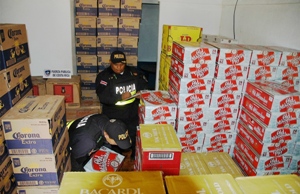
BOGOTÁ: Sixteen Colombian policemen were arrested Wednesday morning in a massive operation aimed at reducing the smuggling of contraband across the Venezuelan border.
After weeks of following the smuggling networks, the Prosecutor General’s investigative body arrested a total of 34 persons, including the 16 policemen, for allegedly facilitating the illegal trade of gasoline and meat at the frontier.

Authorities are currently investigating if the policemen, who according to Prosecutor General officials were stationed at the border in order to prevent illegal activity, also have ties to drug trafficking and drug dealing.
Venezuela has stepped up border closings since August, claiming that smuggling practices and drug trafficking have made the security situation on Venezuela’s side of the border unsustainable.
The ministers of defense of Colombia, Luis Carlos Villegas, and Venezuela, General Vladimir Padrino Lopez, met in October to address the issue.
The meeting produced a bilateral agenda to combat the issues of contraband, transnational organized crime, drug trafficking and paramilitarism at the border zone, which was closed by Venezuelan President Nicolas Maduro on August 19 and has led to the deportation of over 1,500 Colombians and the voluntary displacement of another 20,000.
The Colombian-Venezuelan border is a 1400-mile porous strip, tunneled by contraband sales of goods from family food baskets to petrol, diesel, automobile lubricants, fertilizers, cement, and other elements for industrial use.
Disparities in certain economic indicators between the two South American neighbors make this illegal practice a highly lucrative exercise.
For example, the abysmal difference that characterizes gasoline prices on either side of the dividing line have catalyzed the trade of this valuable resource in the past decade. According to 2012 World Bank figures, Venezuela held one of the most modest gas prices on the planet, at $0.02 USD per liter. Meanwhile in Colombia, the same amount of fuel cost $1.28 USD, representing an enormous profit opportunity for the underground market.
A historically low operability of institutions in the area also allowed the illegal business to prosper, eventually leading to the assembly of a complex network of supply, transport and commercialization carried out in the interstices of the permeable border.
Various illegal groups saw possibilities of wealth in the growing transnational trade, causing remnants of previously demobilized paramilitary members denominated the Urabeños criminal gang to set up camp in the area. Their presence, among others, created a structure of control over the contraband economy, especially gasoline.
At the end of October, Maduro cancelled all meetings with Colombian President Juan Manuel Santos scheduled for November concerning Venezuela’s unilateral closure of the border, and has stated that it will remain indefinitely closed.