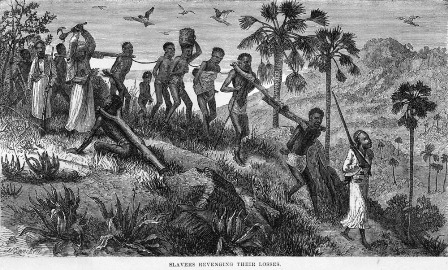

HONG KONG: Between 1500 and 1850, more than 12 million enslaved Africans were transported to the New World. Although historians know many of the coastal shipping points where slave ships left Africa, these locations do not necessarily reflect the actual ethnic or geographical origins of slaves.
Historical documents -such as merchant ledgers and shipping records – provide us with extensive knowledge about the African slave trade. We know how many slaves were transported and aboard what ships. Beyond where they left Africa, however, we know little about the origins of the enslaved Africans themselves.
New research, however, has shone light on this little-understood period of history. Dr Hannes Schroeder from the Centre for GeoGenetics at the Natural History Museum, University of Copenhagen, has been using DNA to plug the holes in the historical record. Her study has recently been published in the Proceedings of the National Academy of Sciences.
Dr Schroeder and her colleagues performed genome analyses on the remains of three enslaved Africans, found buried in the Zoutsteeg area of Philipsburg on the Caribbean island of Saint Martin. It is understood from previous studies that the ‘Zoutsteeg Three,’ one adult female and two adult males, were buried in the seventeenth century and most likely came from Africa, rather than having been born in the New World.
The new study enriched the poorly preserved DNA of the Zoutsteeg Three using a technique known as whole genome capture.
“Those remains had essentially been lying on a Caribbean beach for hundreds of years so their preservation was really not good,” Dr Schroeder explained. “But by enriching the poorly preserved DNA in those samples we were able to obtain enough data to be able to dig deeper into the genetic origins of those three individuals we analyzed.”

Tesla driverless system to use updated radar technology
WASHINGTON: Electric carmaker Tesla announced Sunday it was upgrading its Autopilot software to use more advanced radar technology. In a...