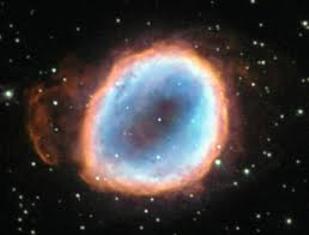

WASHINGTON: Dying stars, like people, can display the infirmities of aging, say astronomers who’ve detected “irregular heartbeats” in some stars nearing the end of their lives.
Researchers at England’s University of Warwick report they’ve seen rapid, irregular brightening in the otherwise regular pulsing of a distant star in the last stages of its life cycle.
Such pulsing stars are known as white dwarf stars — the burnt-out core left at the end of a star’s evolutionary path, extremely dense and composed almost entirely of oxygen and carbon. Our sun, when it runs out of nuclear fuel in around 6 billion years, will eventually become a white dwarf.
Using the Kepler space telescope to observe a white dwarf cataloged as PG 1149+057, they watched it get brighter, then dimmer, over minutes in a regular pattern. They then detected something utterly unexpected, which they report in a study to be published in the Astrophysical Journal Letters.
Every once in a while, over the period of a few days, they observed massive, arrhythmic outbursts that interrupted the star’s steady pulse and heated up its surface for hours.
“We have essentially found rogue waves in a pulsating star, akin to ‘irregular heartbeats,'” said research leader J.J. Hermes of the university’s Astrophysics Group. “These were truly a surprise to see: we have been watching pulsating white dwarfs for more than 50 years now from the ground.”
Only by utilizing Kepler’s ability to stare at a fixed region of space for months on end could the research team catch the unusual events around 120 light years from Earth, in the constellation Virgo.
Some white dwarfs have been observed pulsing in perfect time, not missing a beat, for more than 4 decades — which makes PG 1149+057, with its mysterious outbursts, all the more remarkable, according to the astronomers.

Tesla driverless system to use updated radar technology
WASHINGTON: Electric carmaker Tesla announced Sunday it was upgrading its Autopilot software to use more advanced radar technology. In a...