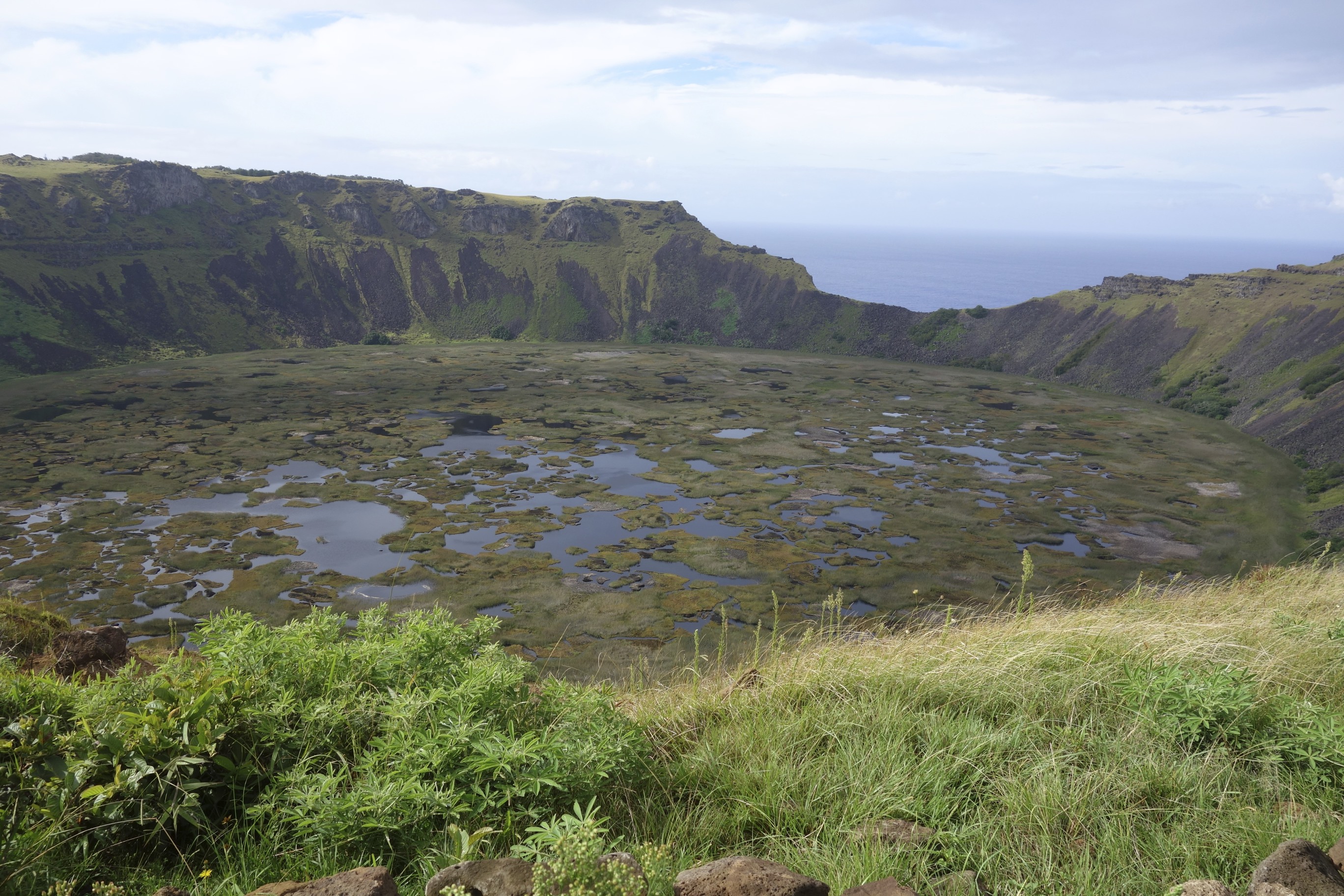

AFRICA: According to a new study of the remote speck of land made famous by its enormous stone-head statues, the collapse of Easter Island may have had more to do with preexisting environmental circumstances than degradation by humans.
The downfall of Easter Island may have had more to do with preexisting environmental conditions than degradation by humans, according to a new study of the remote speck of land made famous by its enormous stone-head statues.
Easter Island, also known as Rapa Nui, was first settled around A.D. 1200, and Europeans landed on its shores in 1722. The circumstances surrounding the collapse of the indigenous population of Rapa Nui are hotly debated both in academia and popular culture. Scientist and author Jared Diamond argued in his 2005 book “Collapse: How Societies Choose to Fail or Succeed” (Viking Press) that prior to European contact, the indigenous people of the island degraded the environment to the extent that they could no longer thrive.
The new study suggests that Easter Island’s people were, indeed, suffering before Europeans came along. The story of their downfall, however, may be less about environmental degradation than the pre-existing environmental constraints of the 63-square-mile isle.
“The results of our research were really quite surprising to me,” said study co-author Thegn Ladefoged, an anthropologist at the University of Auckland in New Zealand. “Indeed, in the past, we’ve published articles about how there was little evidence for pre-European-contact societal collapse.”

Tesla driverless system to use updated radar technology
WASHINGTON: Electric carmaker Tesla announced Sunday it was upgrading its Autopilot software to use more advanced radar technology. In a...