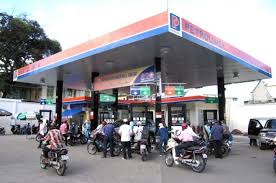
HANOI: Vietnam’s petrol prices have gained 18 percent in 15 days, now selling at VND20,430 a liter following the latest VND1,200 per liter hike on Wednesday. (US$1 = VND21,770)
The Ministry of Industry and Trade and its finance counterpart said the price hike was inevitable thanks to the rise on the global market, and that the new VND3,000 per liter environmental tax is not to blame.The tax used to be only VND1,000 before the higher rate was applied on May 1.


Along with the new environmental tax, the Ministry of Finance cut the fuel import duty to 20 percent from 35 percent, saying it would thus help keep retail fuel prices unchanged. But the two price hikes this month prove the opposite.
Every liter of petrol imported into Vietnam was taxed VND3,945 under the old 35 percent duty, and it is subject to a VND2,254 tax pursuant to the new rate.
The reduced import duty therefore helped lower the base petrol price by VND1,691 a liter. Retail prices will be determined on the basis of this base rate.
But when the extra VND2,000 a liter environmental tax is counted, the base price increases by VND309 a liter, which means the higher environmental tax does affect retail price.
Vietnam has to import 70 percent of its fuel demand, mostly from Singapore. The import price from this market rose 2.7 percent between April 30 and May 20, whereas the domestic retail price was hiked 18 percent during the same period. The Southeast Asian country consumes some 38 million liters of fuel on a daily basis, according to the Vietnam Fuel Association.
With a population of 90 million, each Vietnamese spends VND8,626 on their daily usage of 0.42 liter of fuel, or a monthly sum of VND258,780. This is equal to some seven percent of their monthly income, given a GDP per capita of $169 a month, according to data by the General Statistics Office.
This figure is high compared to other Southeast Asian countries, where fuel costs only account for 0.5 – 3.5 percent of individual income. Sandeep Mahajan, lead economist of the World Bank Group in Vietnam, said fuel costs are “sensitive” to businesses and consumers, so any tax increase must come with supportive policies. But Vietnamese consumers and businesses always fail to enjoy lower fuel prices even when global prices are slumping.
When global crude oil shrank to below $60 a barrel last year, Vietnam increased the fuel import duty to 40 percent, preventing domestic fuel prices from being slashed. The finance ministry said the tax increase was meant to make up for the losses to the state budget caused by declining oil prices.
When Vietnam is forced to reduce the fuel import duties under the integration roadmap of several trade pacts, the ministry came up with the higher environmental tax rate for no purpose other than to offset the loss to state coffers.
These tax policies have prevented local consumers from enjoying reasonable fuel prices, whereas firms face difficulty in planning their business with the volatile fuel costs. Local experts now wonder whom the fuel management policies benefit, when both the public and companies are hurt.