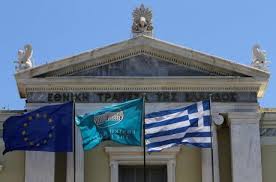
ATHENS: European governments clashed over options to help Greece meet its short-term cash needs while it waits for a eurozone bailout deal to be finalised, officials said on Tuesday. Britain, which does not use the euro, has already said it will resist contributing to any bridge financing to get Greece through several huge debt repayments while details are settled after Monday’s hard-won agreement.
“I can confirm that concerns were raised by several non-euro member states, this is something we will have to take into account,” said Valdis Dombrovskis, the EUs Vice-President for the euro after a meeting with European finance ministers. “Pretty much all options are quite difficult and have political, legal and financial complications,” the former Latvian premier said.Bilateral loans are another option that have been raised, but like the others that would pose difficulties, ministers said.


Finnish Finance Minister Alexander Stubb said it would be “difficult for any member states putting fresh money without conditionality.”Greek Prime Minister Alexis Tsipras struck an 85 billion euro bailout deal with his eurozone partners on Monday that involves painful reforms and a parliamentary vote by Wednesday on key austerity measures. But the deal will take at least four weeks to finalise and implement, and Greece’s creditors estimate Athens needs 12 billion euros to get through mid-August. Next Monday Greece owes the European Central Bank 4.2 billion euros and a default would force the ECB to cut off emergency loans keeping Athens banks afloat.
Greece already on Monday missed a second debt payment to the International Monetary Fund in two weeks, bringing the country’s arrears to the IMF to 2.0 billion euros, an unprecedented embarrassment for a developed nation.