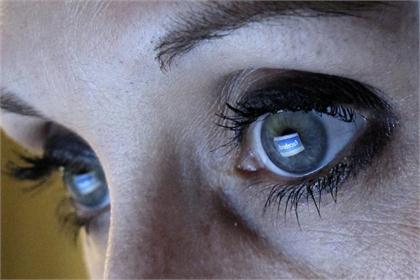
WASHINGTON: We always read that we can’t see infrared light like X-rays and radio waves as infrared light waves are outside the visual range. But a team of researchers co-led by scientists at Washington University School of Medicine in St Louis has established that under confident conditions, the retina can sense infrared light after all.
Using cells from the retinas of mice and people, and powerful lasers that emit pulses of infrared light, the researchers found that when laser light pulses rapidly, light-sensing cells in the retina sometimes get a double hit of infrared energy. When that happens, the eye is able to detect light that falls outside the visible spectrum.
“We’re using what we learned in these experiments to try to develop a new tool that would allow physicians to not only examine the eye but also to stimulate specific parts of the retina to determine whether it’s functioning properly,” said senior investigator Vladimir Kefalov from the Washington University. “We hope that ultimately this discovery will have some very practical applications.”
Findings appear in Proceedings of the National Academy of Sciences.


The research was initiated after scientists on the research team reported seeing occasional flashes of green light while working with an infrared laser. Unlike the laser pointers used as toys, the powerful infrared laser the scientists worked with emits light waves thought to be invisible.
“They were able to see the laser light, which was outside of the normal visible range, and we really wanted to figure out hono but ill get an w they were able to sense light that was supposed to be invisible,” said Frans Vinberg, one of the study’s lead authors.
The researchers repeated previous experiments in which infrared light had been seen, and they analysed such light from several lasers to see what they could learn about how and why it sometimes is visible.
“We experimented with laser pulses of different durations that delivered the same total number of photons, and we found that the shorter the pulse, the more likely it was a person could see it,” Vinberg explained.
Normally, a particle of light, called a photon, is absorbed by the retina, which then creates a molecule called a photopigment, which begins the process of converting light into vision. In standard vision, each of a large number of photopigments absorbs a single photon. But packing a lot of photons in a short pulse of laser light makes it possible for two photons to be absorbed at one time by a single photopigment, and the combined energy of the two light particles is enough to activate the pigment and allow the eye to see what normally is invisible.