WELLINGTON: Here’s a rundown of products that actually seemed useful and set to hit store shelves soon at this year’s CES.
Vysk:


Smartphone cases can often be viewed as an extension of ourselves, thanks to the range of patterns, forms and features they can have. With the Vysk case, though, one thing will be clear: this is the phone of someone who doesn’t want to share. The privacy-focused Smartphone case company makes a line of cases made for the everyday consumer as well as for professionals who seriously want to keep their information to themselves. All cases have sliders that can obscure users’ phones cameras when they’re not in use. The mid-tier (US$40) version is a charging case, while the soon-to-be released top-tier ($230) version shuts down their phone’s microphones and routes all calls through its data app.
Vysk also makes software for iOS devices that promises to encrypt photos and messages in the latter case, as long as both sides of the conversation have the software.
ReSound LiNX hearing aid:
This little hearing aid may seem like a niche product, but the problem of hearing loss ics more widely spread than users might think. According to the Hearing Loss Association of America, around 20 percent of adults in the US report some hearing loss; that number jumps to one in three over the age of 65.
This device hooks up with users Smartphone, and its accompanying app lets users set up audio profiles for specific places, such as restaurants. It will also pull in audio from users Smartphone or even their television, so that they can go easy on the volume button. And, if they ever lose it, there’s also a useful little tracker feature on the app.
Dart laptop charger:
One big pain of hauling users’ laptop any laptop around is carrying around the charger. In many cases, even sleek laptops are accompanied by big brick chargers, which take up a lot of space in a carry-on, and are not exactly portable.
The charger is an MIT project that went to Kick-starter, and supports most major PC laptops and the plugs for multiple countries. It also comes in pretty colours something users can’t normally say of chargers. The Dart laptop charger is up for pre-order for $90, and is set to ship this summer.
Vectu Nano:
The smallest of Aspenta’s line of GPS trackers, the Vectu Nano is a little device that lets users track their belongings, vehicles or even their family members all around the world. Aspenta is a US-based telecommunications company with networks in 190 countries across the world, meaning users have a wide area for tracking. And the US$79 Nano can fit in their palm or pocket, for unobtrusive tracking. For the Nano, a service plan costs just US$24 per year.
Representatives at the booth suggested that it could be particularly good for parents who have children studying abroad. In other words, if Liam Neeson had one of these, the whole “Taken” franchise would have been a lot shorter.
3D Systems Chef Jet:
Really a chocolate printer makes a list of useful gadgets? It would be useful for caterers and other food professionals who want to add a little something extra to their offerings. The company also make sugar printers which, according to the chef at the 3D Systems booth, can print multiple designs simultaneously.
For the average consumer, that could mean being able to send in custom designs for cake-toppers and favours without having to pay a premium price to users’ caterer. That’s pretty cool, right?
Bragi’s the Dash:
Bragi’s “The Dash” headphones are the companies’ solution to that problem a pair of wireless Bluetooth-connected ear buds that double as fitness trackers.
The headphones aren’t for everyone. They are pricey, and not yet out order now, and they should ship in April 2015. But as a consumer product, they’re certainly useful and hopefully a forecast of things to come.
Intel Compute Stick:
With the Intel Compute Stick in hand, nearly any television can become a PC. The US$149 device, which was being shown off at the Intel booth, is more or less a complete computer that can plug into users television’s HDMI port to make it into a Windows 8.1 or Linux computer. And it does all that for US$149, and is about the size of a pack of gum.
It’s a pretty respectable computer. The Windows version has 2 GB of RAM and 32 GB of storage; the Linux version has 1 GB of RAM and 8 GB of storage. It also has a full-sized USB port, a micro USB port, and Bluetooth and WiFi capability. It got a little lost in all of the crazy announcements Intel made this show, but is in a practical way much cooler than a mood-sensing spider dress.
Withings Activite Pop:
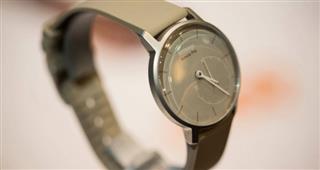
This SmartWatch is remarkable for not looking like a SmartWatch a definite point in its favour as the tech world tries its hand at becoming fashionable. It’s not a fancy accessory by either tech or fashion standards, but it does have an accelerometer that can count their steps, and Bluetooth connectivity, even if it doesn’t have a touchscreen.
The device costs US$150, and is available in blue, grey or beige.
94Fifty Smart Basketball:
The US$180 94Fifty Smart Basketball will tell users exactly what they are getting wrong and how to correct it over time. This piece of smart sports equipment from InfoMotion Sports Technologies was named as one of the show’s Best of Innovations Awards honourees, thanks to its sensor-laden basketball and companion software that gives users information on the speed, angle and timing of their shots.
This, too, may be more interesting because of what it forecasts in its space than what’s actually available on the market now. There were other examples of smart sports equipment already on display at CES, including a smart tennis sensor from Sony that tracks users’ swings.
Juice Box:
Sometimes solving the little problems is as important as solving the big ones. Juice Box is only useful for Apple laptop users. But this charger case is useful if users have ever had problems with the cords of their MacBook charger fraying at the joints a common problem for Apple fans.