Customs Today
  • Home
  • Islamabad
  • Karachi
  • Lahore
  • National
  • Transfers and Postings
  • Chambers & Associations
  • Business
No Result
View All Result
Customs Today
  • Home
  • Islamabad
  • Karachi
  • Lahore
  • National
  • Transfers and Postings
  • Chambers & Associations
  • Business
No Result
View All Result
Customs Today
No Result
View All Result
Home Science & Technology Science

Flatback turtles stay close to coast areas

byCustoms Today Report
20/01/2015
in Science, Science & Technology
Share on FacebookShare on Twitter

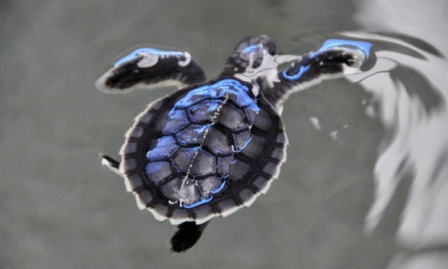
NEW YORK: The baby flatback turtle climbs out of its sandy nest and stares at the perilous shore with a look that says “bring it on”.

Even before they’re born, these blue-eyed beauties are built to withstand the greatest dangers of Australia’s northern continental shelf.


You might also like

Tesla driverless system to use updated radar technology

12/09/2016

Apple to develop its own self-driving technology

10/09/2016

A flatback mother puts her energy into laying fewer but larger eggs than other turtle species to ensure her babies have the best start in life.

They’re also born with a serrated shell and a feisty attitude that helps them fight off predators like sea eagles.

It’s the unique characteristics and habits of these little Aussie nippers that has attracted Florida-based researchers Mike Salmon and Jeanette Wyneken to study how they grow and where they go.

Over the next three months, 31 flatback hatchlings will be on display at the Aquarium of Western Australia (AQWA) before being tagged and released into the sea.

Wyneken said the turtles demonstrated their pint-sized tenacity when they were collected from a beach in northern WA.“You stick your hand in the nest, they haven’t come out yet, and you’re getting bitten,” she said.

“The fact it’s taking on something that’s bigger than it and biting is impressive so I kind of like their attitude.”

While most turtles live in open ocean, flatbacks stay close to the coast where there is more food and predators, which could explain why they’re rougher and tougher, Professor Salmon said.

And unlike other turtles, which can relax further out at sea, the shallow water-dwelling flatbacks never stop swimming.


Tags: Aussie nippersBaby turtles to be label for studydisgracefully hard flatbacksMike Salmon and Jeanette WynekenProfessor SalmonWestern Australia

Related Stories

Tesla driverless system to use updated radar technology

byCT Report
12/09/2016

WASHINGTON: Electric carmaker Tesla announced Sunday it was upgrading its Autopilot software to use more advanced radar technology. In a...

Apple to develop its own self-driving technology

byCT Report
10/09/2016

SAN FRANCISCO: Apple may not become an automaker, but it still wants to develop its own self-driving technology. The iPhone-maker's...

NASA spots slowest known magnetar

byCT Report
10/09/2016

WASHINGTON: Astronomers have found evidence of a magnetar - magnetised neutron star - that spins much slower than the slowest...

‘YouTubers’ outshining old-school television

byCT Report
09/08/2016

SAN FRANCISCO: A media revolution is taking place, and most people over 35 years of age aren’t tuned in. Millennial...

Next Post

26,000 edu institutions without boundary walls: Pervaiz takes PML-N to task for petrol crisis, other issues

  • Terms and Conditions
  • Disclaimer

© 2011 Customs Today -World's first newspaper on customs. Customs Today.

No Result
View All Result
  • Transfers and Postings
  • Latest News
  • Karachi
  • Islamabad
  • Lahore
  • National
  • Chambers & Associations
  • Business
  • About Us

© 2011 Customs Today -World's first newspaper on customs. Customs Today.