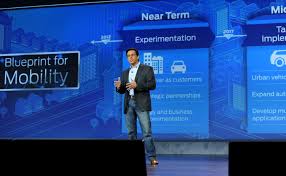
SYDNEY: Ford is offering US$15,000 in prizes to the winners of a global challenge to find the best accessory or app that supports travel in the Australian Outback.
Announced by Ford’s global research and development boss Ken Washington at the company’s Australian headquarters in Melbourne today, it is the latest in a series of what the company dubs the ‘Innovate Mobility Challenge Series’.


Previous challenges have included finding and developing new technologies that improve the design of parking spaces in urban areas, better ways to navigate crowded cities and ways to help people get to medical care faster in remote areas.
“Reaching out to local stakeholders lets Ford more effectively address the diverse mobility challenges around the world,” said Paul Mascarenas, Ford’s chief technical officer.
Now, the carmaker is challenging Australian creatives and inventors to devise a unique accessory or app “that supports drivers when travelling in remote regions”.
“Drivers travelling in remote areas over rugged terrain must be prepared for emergency situations and conditions,” Ford says.
“Having access to help and resources is one of the challenges they face during their journey. A long drive in a desolate location may also lead to driver distraction and inattention.”
“Ford is asking innovators to invent a novel accessory or app that increases driver awareness in remote regions or over rugged terrain.”
“The main goal is to enhance driver self-sufficiency in difficult situations, like electrical failure, hazardous weather and dangerous road conditions.”
The company is offering a total of US$15,000 (AU$19,200) in prizes for each region, with US$10,000 (AU$12,800) going to the winning submission.
Ford says that the goal of the Mobility Challenge Series is to build a better picture of needs in different markets, all to shape the carmaker’s future investments.
“We are driving innovation in every part of our business to be both a product and mobility company – and, ultimately, to change the way the world moves just as our founder Henry Ford did 111 years ago,” said Ken Washington, vice president for Research and Advanced Engineering.
“Some very innovative mobility solutions emerged from our first round of mobility challenges; this new challenge will help us discover new ways to assist people on the move in Australia’s Outback,” he said.