

Customs Today
  • Home
  • Islamabad
  • Karachi
  • Lahore
  • National
  • Transfers and Postings
  • Chambers & Associations
  • Business
No Result
View All Result
Customs Today
  • Home
  • Islamabad
  • Karachi
  • Lahore
  • National
  • Transfers and Postings
  • Chambers & Associations
  • Business
No Result
View All Result
Customs Today
No Result
View All Result
Home Uncategorized

Galaxies are nearly as wide as our Milky Way Galaxy about 60,000 light years

byCustoms Today Report
20/05/2015
in Uncategorized
Share on FacebookShare on Twitter

You might also like

Pakistan to get $3b loan from Islamic Trade Financing Corporation

20/10/2024

Lahore I&I & Enforcement anti-smuggling operations achieve record success in early FY 2024-25

10/09/2024

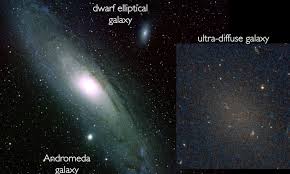
FRANCE: These galaxies are nearly as wide as our Milky Way Galaxy — about 60,000 light-years — yet harbor only 1 percent as many stars.
An international team of researchers led by Pieter van Dokkum at Yale University has used the W. M. Keck Observatory to confirm the existence of the most diffuse class of galaxies known in the universe. These “fluffiest galaxies” are nearly as wide as our Milky Way Galaxy — about 60,000 light-years — yet harbor only 1 percent as many stars.
“If the Milky Way is a sea of stars, then these newly discovered galaxies are like wisps of clouds,” said van Dokkum. “We are beginning to form some ideas about how they were born, and it’s remarkable they have survived at all. They are found in a dense, violent region of space filled with dark matter and galaxies whizzing around, so we think they must be cloaked in their own invisible dark matter ‘shields’ that are protecting them from this intergalactic assault.”
The team made the latest discovery by combining results from one of the world’s smallest telescopes as well as the largest telescope on Earth. The Dragonfly Telephoto Array used 14-centimeter state-of-the-art telephoto-lens cameras to produce digital images of the faint, diffuse objects. Keck Observatory’s 10-meter Keck I Telescope with its Low Resolution Imaging Spectrograph then separated the light of one of the objects into colors that diagnose its composition and distance.
Finding the distance was the clinching evidence. The data from Keck Observatory showed the diffuse “blobs” are large and far away, about 300 million light-years, rather than small and close by. The blobs can now safely be called Ultra Diffuse Galaxies (UDGs).

Tags: international team of researchersMilky Way galaxy

Related Stories

Pakistan to get $3b loan from Islamic Trade Financing Corporation

byCT Report
20/10/2024

ISLAMABAD: Islamic Trade Financing Corporation (ITFC) to provide Pakistan with a $3 billion loan, according to an official statement released...


Lahore I&I & Enforcement anti-smuggling operations achieve record success in early FY 2024-25

byCT Report
10/09/2024

LAHORE:  Regional Directorate of Customs Intelligence & Investigation has demonstrated exceptional performance in the first two months of the fiscal...

ICCI and CDA to join hands for tree plantation drive in Capital

byQaisar Mansoor
09/08/2023

ISLAMABAD: Islamabad Chamber of Commerce and Industry (ICCI) in collaboration with the Capital Development Authority (CDA) would jointly launch a...

Customs Officials Yawar Abbas & Tariq Mehmood kidnapped in Karachi

byCT Report
08/07/2023

KARACHI: Customs Intelligence Officer Yawar Abbas and Customs Preventive Officer Tariq Mehmood who were working against smuggling were kidnapped by...

Next Post

APBF urges govt to promote FDI, direct taxes in upcoming budget

  • Terms and Conditions
  • Disclaimer

© 2011 Customs Today -World's first newspaper on customs. Customs Today.

No Result
View All Result
  • Transfers and Postings
  • Latest News
  • Karachi
  • Islamabad
  • Lahore
  • National
  • Chambers & Associations
  • Business
  • About Us

© 2011 Customs Today -World's first newspaper on customs. Customs Today.