
Customs Today
  • Home
  • Islamabad
  • Karachi
  • Lahore
  • National
  • Transfers and Postings
  • Chambers & Associations
  • Business
No Result
View All Result
Customs Today
  • Home
  • Islamabad
  • Karachi
  • Lahore
  • National
  • Transfers and Postings
  • Chambers & Associations
  • Business
No Result
View All Result
Customs Today
No Result
View All Result
Home International Customs Germany

German labour costs exceed EU average by one-third

bySahar
06/05/2015
in Germany
Share on FacebookShare on Twitter

BERLIN: The latest numbers show labour is more expensive in Germany than in many other EU member states, especially in the industrial sector, though the trend does not show any negative effects for the country’s competitiveness. EurActiv Germany reports.

In 2014, employers spent an average of €31.80 per man-hour in Germany’s private sector economy. This ranks the country eighth among its EU counterparts, the Federal Statistical Office reported on Monday (4 May) in Wiesbaden.
You might also like

Germany Raises 2020 Growth Forecast Slightly to 1.1%

03/02/2020

A top German carrier picks Huawei to help build its 5G network in potential snub to the US

21/01/2020

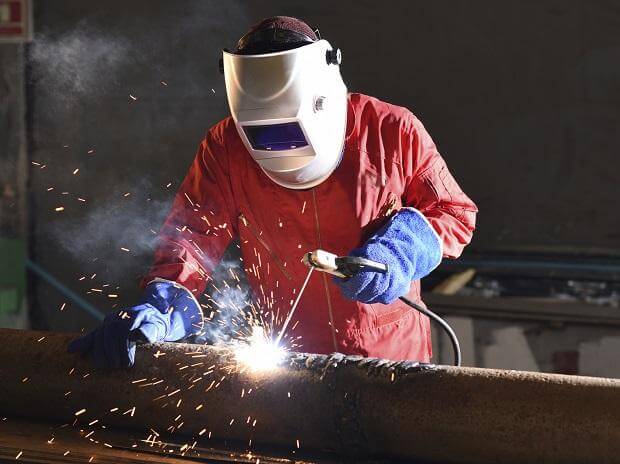
In the manufacturing industry, which faces particularly high international competition, one man-hour costs €37 on average. Here, Germany ranked fourth in the EU-wide comparison.

Still, the country’s industry remains competitive internationally. This is largely due to high productivity, the GNP generated by each worker, a category where Germany performed above the EU average.

Europe’s highest labour costs in the private sector were found in Denmark. There, one man-hour costs €42 on average, according to the Statistical Office’s numbers, with €41.60 in the manufacturing industry.

Employers paid the least in Bulgaria with an average of €3.80 per man-hour in the private sector economy overall and €3.20 in manufacturing. Labour costs were calculated by combining gross income and incidental wage costs.

In 2014, employers in Germany’s private economy spent an average of €28 on incidental wage costs per €100 of gross income paid.

Tags: Labour

Related Stories

Germany Raises 2020 Growth Forecast Slightly to 1.1%

byadmin
03/02/2020

BERLIN: THE German government modestly raised its economic growth forecast for the country this year to 1.1%. Germany's economy, Europe's...

A top German carrier picks Huawei to help build its 5G network in potential snub to the US

byadmin
21/01/2020

Telefonica Deutschland, one of Germany’s top mobile carriers, has picked Huawei and Nokia to build out its 5G network. 5G...

Gold price surges amid geopolitical uncertainty

byadmin
13/01/2020

These are golden days for gold, the precious metal whose very name is a synonym for something special and successful....

India may overtake Germany to become fourth-largest economy in 2026: Report

byadmin
30/12/2019

India is expected to overtake Germany to become fourth-largest economy in 2026 and Japan to become third largest in 2034,...

Next Post

Hong Kong stocks slip 0.29pc in early trade, Hang Seng sheds 81.24pts 

  • Terms and Conditions
  • Disclaimer

© 2011 Customs Today -World's first newspaper on customs. Customs Today.

No Result
View All Result
  • Transfers and Postings
  • Latest News
  • Karachi
  • Islamabad
  • Lahore
  • National
  • Chambers & Associations
  • Business
  • About Us

© 2011 Customs Today -World's first newspaper on customs. Customs Today.