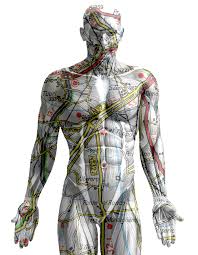
MELBOURNE: An Australian professor team has dubbed the Google Maps technology to create a similar innovative technique that can zoom into the human body at a cellular level. Reportedly, the imaging technology is being used by the biomedical researchers to examine osteoarthritis and osteoporosis, one of the leading conditions that lead to disability in the ageing population.
Melissa Knothe Tate, a professor from University of New South Wales (UNSW) Australia, is leading the project, using semiconductor technology to explore osteoporosis and osteoarthritis.


Using Google algorithms, Professor Knothe Tate – an engineer and expert in cell biology and regenerative medicine – is able to zoom in and out from the scale of the whole joint down to the cellular level “just as you would with Google Maps”, reducing to “a matter of weeks analyses that once took 25 years to complete”.
“For the first time we have the ability to go from the whole body down to how the cells are getting their nutrition and how this is all connected,” said Knothe Tate.
“This could open the door to as yet unknown new therapies and preventions,” added Knothe Tate, who is first to use the system in humans.
Knothe Tate presented several papers on her research into the human hip and osteoarthritis at the Orthopedic Research Society meeting in Las Vegas recently.
Knothe Tate likened using the Zeiss technology in the hipbone to Google Maps’ ability to zoom down from an Earth View to Street View.
“These are terabyte-sized data sets so the Google maps algorithms are helping us take this tremendous amount of information and use it effectively.
“The implications will ultimately pave the way to engineer better human health and quality of life as we age,” the scientist concluded.