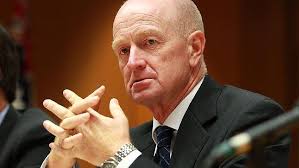
CANBERRA: The governor of the Reserve Bank, Glenn Stevens, has encouraged the US Federal Reserve to stop pussy-footing around with interest rates and start unwinding its ultra-loose monetary policy, dismissing gloomy assessments of Australia’s economy and playing down fears higher rates in the US will prompt destabilising financial volatility.
Speaking hours after the Fed kept its official interest rate on hold and presented a surprisingly “dovish” economic outlook predicated on concerns about China, Mr Stevens said the US economy was clearly improving and “everyone knew” this had to be reflected in higher interest rates.


“I think it’s a better thing really if the Fed can get the lift-off achieved,” he said, referring to the belief of many economists that near-zero interest rates in the US are fuelling financial instability.
“In the end there is always going to be some market dynamic, some weak piece of data or some argument to say, ‘Don’t do it just yet’. There is always going to be that, and one day you are just going to have to do it,” he added, alluding to the bout of financial volatility in China following the recent 40 per cent drop in the Chinese equity market and unexpected depreciation of the yuan.
“Whether that financial volatility itself serves further to dampen growth prospects remains to be seen,” he said, speaking in Canberra at his six-monthly testimony before the Senate Economics committee.
The Fed’s decision, announced early Friday morning local time, prompted a 1.5 per cent surge in the Australian dollar to almost US73c, but the local currency soon returned to US72c, around which it hovered yesterday.
Equity markets responded more calmly to the news. The market ended an eventful week, which also saw a new Prime Minister in Malcolm Turnbull, in the black. The benchmark S&P/ASX200 finished up 0.7 per cent up on Friday at 5,185, almost 2 per cent higher than its Monday opening.
Mr Stevens acknowledged the recent cut in the projection for global economic growth but said the Australian economy — which grew at 2 per cent over the year to June — was doing relatively well and shouldn’t be compared to the era before the global financial crisis.
“We have a bit of a tendency right now in the general public discourse to be more negative than the facts actually warrant,” he said, highlighting employment had grown by 200,000 over the past year and business trading conditions had improved.
“It is not the ebullient consumer and business community that we had from the late nineties through to 2006, but I am sorry, that is not coming back,” he said, pointing to solid business conditions and the already far weaker Australian dollar that was helping tourism and education providers.
“If we were to try to line up the current exchange rate with various fundamentals you’d be hard pressed to say they are seriously misaligned,” he said, noting however that exchange rates tend to “overshoot”.
Mr Stevens indicated the Reserve Bank was not inclined to change its own policy rate: “We are different; we didn’t have the deep downturn. Should we (lower rates) a bit more? We are content where we are.”
Despite the clarification, another interest rate cut by the RBA within the next 12 months is still likely. Shane Oliver, AMP’s chief economist, said the Fed’s decision was “mixed blessing” for Australia.
“It would have been better to have seen the Fed able to raise interest rates as it would signal greater confidence in global growth and ongoing downwards pressure on the value of the Australian dollar,” he said. Mr Oliver believes the dollar will fall to around US60c in the next 12 months.
“If the Chinese economy were to experience the fabled hard landing that many people have talked about for years — and which so far hasn’t happened — you would expect in that world the exchange rate’s probably going to go down, probably quite a bit, and that will be one of the key mechanisms that helps the Australian economy cope.”
Mr Stevens said the “normal” level of interest rates globally was likely to be significantly lower than it was before the global financial crisis, but stressed this new level was not near zero.