

Customs Today
  • Home
  • Islamabad
  • Karachi
  • Lahore
  • National
  • Transfers and Postings
  • Chambers & Associations
  • Business
No Result
View All Result
Customs Today
  • Home
  • Islamabad
  • Karachi
  • Lahore
  • National
  • Transfers and Postings
  • Chambers & Associations
  • Business
No Result
View All Result
Customs Today
No Result
View All Result
Home Uncategorized

Heavy metal rain may explain Earth, moon differences

byCustoms Today Report
06/03/2015
in Uncategorized
Share on FacebookShare on Twitter

You might also like

Pakistan to get $3b loan from Islamic Trade Financing Corporation

20/10/2024

Lahore I&I & Enforcement anti-smuggling operations achieve record success in early FY 2024-25

10/09/2024

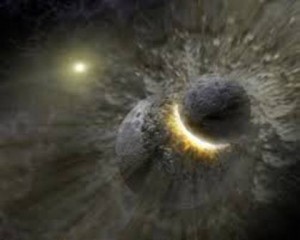
FRANCE: We already know that Earth’s formation would have been a rough time for the planet — asteroids and even other young planets from the Solar System’s birth slammed into our planet repeatedly. Now, though, researchers suspect that that bombardment may have included mists of molten iron and other metals raining down from the sky. The finding might also explain why the Moon and the Earth have such different chemistry, according to Simon Redfern, at the Conversation.
About 4.6 billion years ago, the swirls of hot dust and gas around our Sun finally coalesced and collided; the Earth and other planets were born. Or so we think. Those events happened so long ago that piecing them together is tricky. For example, the Moon may have come from a collision between young Earth and a Mars-sized protoplanet, whose dense elements joined Earth’s blisteringly-hot iron core. But there are other theories too. Another mystery: why is the Earth’s composition so different from the Moon’s?
The Moon has less iron and precious metal than the Earth does, and the Earth really has too many of those too close to the surface. As the core formed, it should have “sucked” all the heavier elements out of the mantle. But researchers’ measurements show a lot more iron, gold and other metals in the mantel than we’d expect. The new research solves that problem: Instead of just modeling possibilities, a team of researchers used the Sandia National Laboratory’s Z machine—which can generate enormous pulses of electromagnetic radiation—to figure out what might have happened to iron-bearing asteroids that bombarded early Earth.
They found that when the planet was super hot, like it was during formation, iron would have vaporized easily on impact.

Tags: EarthHeavy metal rainmetal rain may explainmoon differencesSandia National Laboratory’Simon Redfernsolar system

Related Stories

Pakistan to get $3b loan from Islamic Trade Financing Corporation

byCT Report
20/10/2024

ISLAMABAD: Islamic Trade Financing Corporation (ITFC) to provide Pakistan with a $3 billion loan, according to an official statement released...

Lahore I&I & Enforcement anti-smuggling operations achieve record success in early FY 2024-25

byCT Report
10/09/2024

LAHORE:  Regional Directorate of Customs Intelligence & Investigation has demonstrated exceptional performance in the first two months of the fiscal...

ICCI and CDA to join hands for tree plantation drive in Capital

byQaisar Mansoor
09/08/2023

ISLAMABAD: Islamabad Chamber of Commerce and Industry (ICCI) in collaboration with the Capital Development Authority (CDA) would jointly launch a...

Customs Officials Yawar Abbas & Tariq Mehmood kidnapped in Karachi

byCT Report
08/07/2023

KARACHI: Customs Intelligence Officer Yawar Abbas and Customs Preventive Officer Tariq Mehmood who were working against smuggling were kidnapped by...

Next Post

Scientists to find fingerprints of life on earth like planets

  • Terms and Conditions
  • Disclaimer

© 2011 Customs Today -World's first newspaper on customs. Customs Today.

No Result
View All Result
  • Transfers and Postings
  • Latest News
  • Karachi
  • Islamabad
  • Lahore
  • National
  • Chambers & Associations
  • Business
  • About Us

© 2011 Customs Today -World's first newspaper on customs. Customs Today.