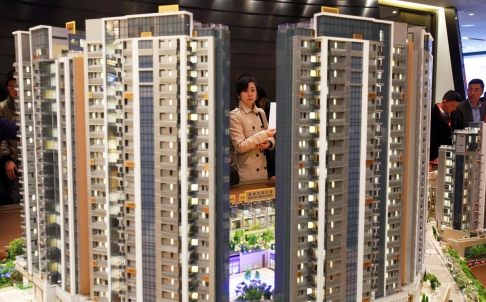
HONG KONG: The city’s revenue from stamp duties received in this financial year could amount to HK$70 billion, a more than 80 per cent jump from last year, thanks to the government’s extra effort to cool the property market.
A source familiar with the situation said the double stamp duty – targeting investors owning more than one property – had contributed about HK$20 billion.


It is a massive amount compared to last year’s total stamp duties revenue of HK$37.7 billion, which also includes duties from trading on the stock market.
The cooling measure was announced in February 2013, four months after the Buyers Stamp Duty and Special Stamp Duty were put in place to rein in rising property prices.
The windfall – likely to bring about a budget surplus of at least HK$60 billion this fiscal year and six times Financial Secretary John Tsang Chun-wah’s projection – has put pressure on Tsang to consider more giveaways in his budget speech to be delivered later this month.
This is despite calls from the financial secretary’s fiscal advisers to take a prudent approach to avoid speeding up the emergence of a structural deficit.
Revenue generated from double stamp duty has been accumulated for about two years, as the tax was only officially approved by lawmakers in July last year. Under the government’s cash-based accounting approach, the money collected during the two years will go into this year’s revenue.
The source said the moderate rise in revenue from salary tax and profit tax – more than HK$10 billion – also contributed to the massive surplus, which Tsang tried to control by setting aside HK$27 billion in December to establish a housing reserve.
“The government should wean Hong Kong people off sweeteners, just like weaning a child from [a mother’s] milk, to keep the city financially sustainable,” said Liu Pak-wai, an economics professor and long-term member of the fiscal planning working group.
Liu said sweeteners should only be considered when the city faced high unemployment and slow economic growth. But he said the government could consider giving one-off subsidies to families waiting for public housing instead of waiving rent for existing tenants.
“In the face of rising rents, people living in private flats are poorer than those in public flats,” he said. “Having said that, subsidies shouldn’t be given to young single people in the queue or those who cannot provide proof of rent.”
At the end of last year, there were about 133,700 households waiting for a public flat, while some 750,000 households were living in public rental housing.
Liu also recommended increasing the amount of the old-age living allowance and providing free education for children under six.
Another working group member and veteran accountant, Marcellus Wong Yui-keung, said the government should use the surplus to invest in the city’s future, such as improving health care and education.
He also warned that the future launch of the health protection scheme and retirement pension could speed up the emergence of a structural deficit, which might come in seven years – by 2022/23 – according to the working group’s earlier projection.
“One-off measures will create public expectation. Continuing to repeat those measures is not conducive to financial discipline,” he said.