
Customs Today
  • Home
  • Islamabad
  • Karachi
  • Lahore
  • National
  • Transfers and Postings
  • Chambers & Associations
  • Business
No Result
View All Result
Customs Today
  • Home
  • Islamabad
  • Karachi
  • Lahore
  • National
  • Transfers and Postings
  • Chambers & Associations
  • Business
No Result
View All Result
Customs Today
No Result
View All Result
Home Science & Technology Science

How Arctic ozone hole was avoided by Montreal Protocol

byCustoms Today Report
27/05/2015
in Science, Science & Technology
Share on FacebookShare on Twitter

You might also like

Tesla driverless system to use updated radar technology

12/09/2016

Apple to develop its own self-driving technology

10/09/2016

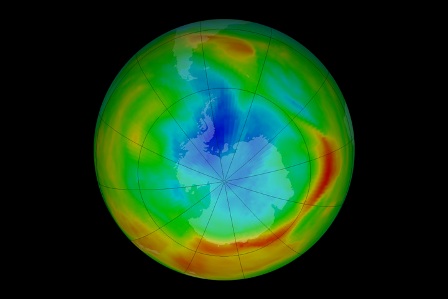
PARIS: An ozone hole larger than Australia would have opened up over the Arctic if we had continued to use CFC’s for the past three decades.
New 3D computer models reveal what the ozone layer in the stratosphere would have looked like had countries not agreed to the Montreal Protocol in 1987, which restricted the production and use of ozone-depleting chemicals such as chlorine and bromine.
The models also reveal the current ozone hole above Antarctica would have grown 40 per cent larger by 2013 and UV radiation levels in the most densely populated regions of Australia and New Zealand would have increased by eight to 12 per cent.
Australia already has the highest death rate from skin cancers. Previous research has suggested these cancers would have increased worldwide by 15 per cent by 2030 without the international treaty and ensuing action.
CFCs were widely used as refrigerants in air conditioners, refrigerators and freezers, as well as propellants in spray cans, styrofoam manufacturing and various medical products.
One of the study’s New Zealand authors, Richard McKenzie, said concern about ozone depletion started in the 1970s, but it was the appearance of a springtime ozone hole over Antarctica in 1980 that galvanised public attention about the environmental damage of these substances.
After the protocol was signed chlorofluorocarbons (CFCs) were at first replaced with hydrochlorofluorocarbons, which did less damage to the ozone layer. Now hydrofluorocarbons, such as propane, are generally used because they don’t contain any substances that affect the ozone.

Tags: Arctic ozoneMontreal Protocol

Related Stories

Tesla driverless system to use updated radar technology

byCT Report
12/09/2016

WASHINGTON: Electric carmaker Tesla announced Sunday it was upgrading its Autopilot software to use more advanced radar technology. In a...


Apple to develop its own self-driving technology

byCT Report
10/09/2016

SAN FRANCISCO: Apple may not become an automaker, but it still wants to develop its own self-driving technology. The iPhone-maker's...

NASA spots slowest known magnetar

byCT Report
10/09/2016

WASHINGTON: Astronomers have found evidence of a magnetar - magnetised neutron star - that spins much slower than the slowest...

‘YouTubers’ outshining old-school television

byCT Report
09/08/2016

SAN FRANCISCO: A media revolution is taking place, and most people over 35 years of age aren’t tuned in. Millennial...

Next Post

Finnish consumer confidence level rises from 61% to 63, lower in Nordics in Q1 of 2015

  • Terms and Conditions
  • Disclaimer

© 2011 Customs Today -World's first newspaper on customs. Customs Today.

No Result
View All Result
  • Transfers and Postings
  • Latest News
  • Karachi
  • Islamabad
  • Lahore
  • National
  • Chambers & Associations
  • Business
  • About Us

© 2011 Customs Today -World's first newspaper on customs. Customs Today.