
HONG KONG: It’s one of the most important questions on the planet: How much are the seas ultimately going to rise, thanks to what we’re doing to the atmosphere with all our cars and power plants? Scientists are still struggling to find a clear answer to it.
But a new scientific analysis, just out in the journal Science by researchers led by Andrea Dutton of the University of Florida — and including a large team of scientists from the United States, Britain, and Germany — gives a pretty clear sense of what’s at stake. The new assessment compares the current state of the planet with three other warm periods from the Earth’s deep past that are, to varying degrees, comparable with where we may now be steering things.
And the punchline is that in each of these periods within the last 3 million years or so, the researchers estimate that sea levels eventually rose some 6 meters — equivalent to nearly 20 feet — higher than they are right now.
“We looked at these three different warm periods, because there’s no one time period that’s going to be a perfect analogue,” said Dutton. “We looked at several of the warmest interglacials, and for each of them, we’re finding at least 6 meters worth of sea level rise.”
It’s important to emphasize that the researchers are not saying we’re committed to this much long term sea level rise yet — just that if current emissions and warming continue, we could get there.
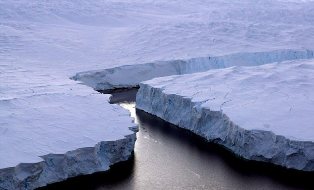
This may seem odd, given that while we read regular headlines about how the planet is losing ice — from mountain glaciers around the world, and from the great ice sheets of Greenland and Antarctica — the consequent sea level increase seems terribly small, just a few millimeters per year.
Yet current sea level rise may be deceptive — the main factors behind it aren’t the really big ones. The current top drivers are thermal expansion of sea water as it heats up and the loss of glaciers around the world — including 75 billion tons of ice loss yearly from the Alaska region alone. That’s enough to cause sea level upticks of a millimeter or so per year, but when you think about the grand pageant of planetary history, it’s not the real story.

Tesla driverless system to use updated radar technology
WASHINGTON: Electric carmaker Tesla announced Sunday it was upgrading its Autopilot software to use more advanced radar technology. In a...